The best dust extractors make power-tool work cleaner, safer, and easier to manage. Whether you need HEPA filtration for fine dust, automatic tool activation, or a high-capacity collector for a workshop, the right model can reduce airborne debris and cleanup time.
We compared 10 dust extractors and related dust-control systems across filtration, suction, capacity, portability, noise, and tool compatibility. Use the guide below to narrow the list based on your workspace and the materials you handle.
Best 10 Dust Extractors Picks for 2026
High-Capacity Dust Control

- 9-gallon wet/dry dust extractor
- Automatic filter cleaning every 15 seconds
- HEPA filtration and tool activation
Best For: Jobsite power-tool dust collection
Connected Workshop Performance

- 9.5-gallon HEPA dust extractor
- Five suction levels and automatic tool start
- Bluetooth and Systainer integration
Best For: System-based workshops and construction sites
Pre-Filter Debris Control
DEWALT DXVCS002 Dust Separator

- 6-gallon cyclonic debris separator
- Helps reduce vacuum filter clogging
- Includes casters, bucket, and hose
Best For: Upgrading an existing shop-vac system
Compact HEPA Extraction

- 15-liter mobile dust extractor
- HEPA filtration with automatic tool start
- Built-in crevice and upholstery tools
Best For: Portable cleanup and smaller indoor jobs
Compact Workshop Pick
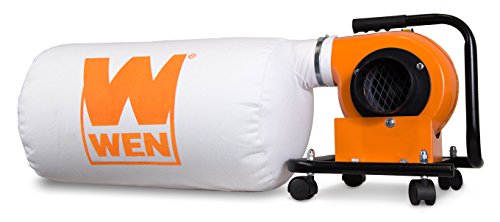
- 660 CFM airflow with a 4-inch dust port
- Mobile base plus optional wall mounting
- 12-gallon, 5-micron zippered collection bag
Best For: Small woodworking shops needing flexible placement
Smart HEPA Choice
Festool CT MIDI I Dust Extractor

- HEPA filtration for workshop and indoor use
- Bluetooth remote and automatic tool start
- Manual filter cleaning with tool-free filter changes
Best For: Feature-focused woodworking and renovation cleanup
Quiet Wet/Dry Performer
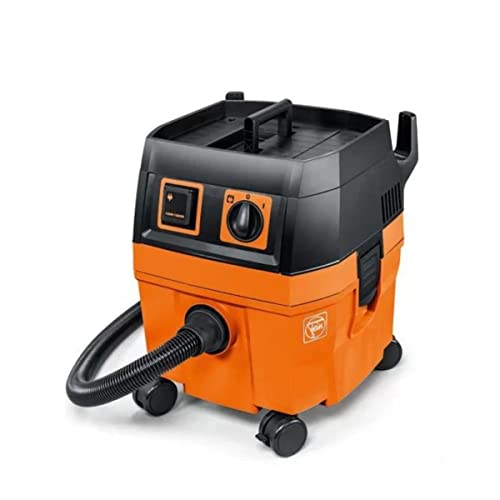
- 151 CFM with 98 inches of water lift
- 66 dB operation for noise-sensitive areas
- Auto-start outlet plus long cord and hose
Best For: Wet/dry workshop and job-site cleanup
Best for Flexible Workshop Cleanup
ECOMAX 8-Gallon HEPA Dust Extractor

- Power-tool activation for automatic starts
- HEPA filter with semi-automatic cleaning
- 10-foot anti-static hose and accessory kit
Best For: Woodworking, garage, and general shop cleanup
Best for Heavy-Duty Extraction
Makita VC4210L 11-Gallon HEPA Dust Extractor

- 11-gallon wet/dry capacity
- Automatic filter cleaning and HEPA filtration
- Tool-activated outlet with 10-second delay
Best For: Frequent workshop, concrete, and hard-floor cleanup
Best for Remote-Controlled Cleanup
CVL30-RC 8-Gallon HEPA Dust Extractor

- Remote control for convenient operation
- Dry, wet, and blowing functions
- 11.5-foot hose with mobile eight-wheel base
Best For: Garages and workshops needing flexible, remote-controlled cleanup
High-Capacity Dust Control – Bosch VAC090AH
The Bosch VAC090AH is one of the more capable dust extractors for workshop and jobsite use. Its 9-gallon wet/dry design combines strong airflow, automatic filter cleaning, tool activation, and HEPA filtration for demanding dust-collection tasks.
Best For: Contractors and serious DIY users who need portable dust extraction for power tools, grinders, and dry or wet cleanup.
Pros:
- Delivers up to 150 CFM and 97 inches of static water lift.
- Automatically cleans the filter every 15 seconds to help maintain suction.
- Power-tool activation starts and stops the vacuum with the connected tool.
- HEPA filtration captures 99.97% of particles at 0.3 microns or larger.
Cons:
- Its corded design requires access to a 120-volt outlet.
- The 28-pound canister may be less convenient for frequent stair or vehicle transport.
With strong extraction performance and convenient automatic cleaning, this Bosch is a practical choice when dust control and sustained suction matter more than minimal size.
Connected Workshop Performance – Festool CT 36 EI HEPA
The Festool CLEANTEC CT 36 EI HEPA is a premium option among dust extractors for workshops and construction sites. It offers five suction settings, automatic tool-triggered operation, Bluetooth connectivity, and a spacious 9.5-gallon capacity.
Best For: Workshop and construction users who want adjustable suction, remote or Bluetooth control, and Systainer-compatible storage.
Pros:
- Provides five selectable suction levels for different applications.
- Automatically starts with compatible corded power tools.
- Bluetooth supports automatic starting with compatible battery packs or an optional remote.
- T-LOC attachment makes it easy to connect Systainers.
Cons:
- At 39.3 pounds, it is the heaviest extractor in this group.
- The advanced controls and accessories may be more than occasional users need.
This Festool stands out for control and system integration. It is especially appealing if your workflow already uses Systainers or compatible Festool Bluetooth tools.
Pre-Filter Debris Control – DEWALT DXVCS002 Dust Separator
The DEWALT DXVCS002 takes a different approach to dust extractors: it is a 6-gallon dust separator rather than a powered vacuum. It captures chips, dust, and other debris before they reach a compatible wet/dry vacuum, helping reduce filter clogging and suction loss.
Best For: Workshop users who already own a compatible shop vacuum and want to extend filter life while collecting larger debris.
Pros:
- Pre-separates wood chips, drywall dust, concrete dust, and other debris.
- Works with many vacuums through 1-7/8-inch or 2-1/2-inch ports.
- Four casters make the separator easy to move around a workshop.
- Includes a 6-gallon bucket and a three-year limited warranty.
Cons:
- It does not include a vacuum cleaner.
- Its 1-3/4-inch hose may require adapters for some setups.
This DEWALT is best viewed as an accessory for an existing wet/dry vacuum. It can make a compatible system more efficient, but it is not a standalone extractor.
Compact HEPA Extraction – Festool CT 15
The Festool CT 15 is a compact choice among dust extractors for mobile cleanup and lighter-duty workshop tasks. It combines HEPA filtration, automatic tool start, adjustable high-performance suction, and a 15-liter container in a stable, portable chassis.
Best For: Users who need a compact extractor for bare floors, carpets, furniture, upholstery, and portable indoor or outdoor work.
Pros:
- HEPA filtration supports fine-dust collection.
- Automatic tool start coordinates the extractor with compatible tools.
- Included crevice and upholstery tools store inside the unit.
- Compact chassis with steel axles is designed for mobile use.
Cons:
- The 15-liter capacity is smaller than the Bosch and CT 36 options.
- It has one power level rather than multiple selectable settings.
The CT 15 prioritizes portability and convenience over maximum capacity. Its built-in accessory storage and compact footprint make it a sensible fit for detail cleaning and smaller jobs.
Compact Workshop Pick – WEN DC3401 Dust Collector
The WEN DC3401 is one of the more compact dust extractors for woodworking setups that need flexible placement. Its 5.7-amp motor and 6-inch impeller move up to 660 CFM, while the rolling base and optional wall mount make it practical for smaller shops.
Best For: Woodworkers who want a mobile or wall-mounted collector for compatible tools and engineered-wood projects.
Pros:
- Moves up to 660 CFM through a 4-inch dust port.
- Compact 17-pound design includes a carrying handle.
- Lockable swivel casters and optional wall mount support flexible storage.
- Includes a 12-gallon, 5-micron zippered collection bag and two-year warranty.
Cons:
- Uses a brushed motor with a single power level.
- The supplied notes identify a foam filter rather than a HEPA filter.
The DC3401 emphasizes portability and straightforward workshop dust collection rather than advanced controls. Check that your tools use its 4-inch port and that its filtration and capacity match your cleanup needs.
Smart HEPA Choice – Festool CT MIDI I Dust Extractor
The Festool CT MIDI I is a compact HEPA dust extractor designed for controlled workshop and job-site cleanup. Touch controls, Bluetooth remote operation, automatic tool start, and manual filter cleaning make it a feature-rich option for woodworking and indoor renovation tasks.
Best For: Users who prioritize HEPA filtration, tool-linked operation, and compact mobility for woodworking, construction, and hard-floor work.
Pros:
- HEPA filter supports fine-particle filtration.
- Bluetooth lets users start and stop the extractor remotely.
- Automatic tool start helps coordinate extraction with power-tool use.
- Manual filter cleaning and tool-free filter changes simplify maintenance.
Cons:
- The supplied notes do not state the unit’s airflow or suction rating.
- It is a corded extractor with a listed 30-minute runtime.
With its compact chassis and integrated controls, the CT MIDI I suits users who value convenience and filtration features. Its included smooth hose and SELFCLEAN filter bag further support routine mobile use.
Quiet Wet/Dry Performer – FEIN Turbo I Dust Extractor
The FEIN Turbo I is a wet/dry dust extractor for workshops and job sites where reach and noise control matter. Its 1100-watt turbine produces 151 CFM and 98 inches of water lift, while the long cord and hose reduce the need to reposition the unit.
Best For: Indoor workshops, garages, and job sites needing wet/dry cleanup, tool activation, and comparatively quiet operation.
Pros:
- Provides 151 CFM and 98 inches of water lift for strong extraction.
- Operates at a listed 66 dB noise level.
- Includes a 19-foot power cord and 13-foot flexible vacuum hose.
- Auto-start outlet includes a power-on delay for tool-connected use.
Cons:
- Its 5.8-gallon capacity is smaller than the WEN model’s 12-gallon bag.
- The one-year warranty is shorter than the WEN’s supplied two-year warranty.
- Anti-static protection may require optional accessories.
The Turbo I balances extraction strength, reach, and quieter operation in a canister format. Its wet/dry capability and included accessory kit make it versatile, though buyers should consider its smaller capacity for extended cleanup.
Best for Flexible Workshop Cleanup – ECOMAX 8-Gallon HEPA Dust Extractor
If you need dust extractors for both routine cleanup and woodworking, the ECOMAX Shop Vac offers dual-mode operation in a compact 8-gallon format. Its power-tool activation, HEPA filtration, and semi-automatic filter cleaning are useful for maintaining suction while you work.
Best For: Woodworkers, DIYers, and garage users who want one vacuum for power-tool dust collection and general wet or dry cleanup.
Pros:
- Power-tool activation starts the vacuum when a connected tool turns on.
- HEPA filtration, dust-full indicator, and semi-automatic filter cleaning support sustained performance.
- Includes a 10-foot anti-static hose and a broad accessory kit.
- Durable 8-gallon polymer tank includes a drain port for easier emptying.
Cons:
- At 75 dB, it may be relatively loud during extended use.
- The corded design requires access to a 120-volt outlet.
The ECOMAX is a versatile choice when automatic tool activation and included accessories matter more than having the largest tank. It suits workshops that need practical dust extraction without giving up everyday shop-vac functionality.
Best for Heavy-Duty Extraction – Makita VC4210L 11-Gallon HEPA Dust Extractor
The Makita VC4210L is one of the more capable dust extractors for demanding workshop and jobsite cleanup. It combines an 11-gallon wet/dry capacity with a 12-amp motor, automatic filter cleaning, HEPA filtration, and a tool-activated outlet with a delayed shutoff.
Best For: Users who need higher-capacity wet/dry extraction for concrete, hard floors, woodworking, or frequent power-tool cleanup.
Pros:
- 12-amp motor delivers stated suction performance of 148 CFM and 92 inches of water lift.
- Automatic filter cleaning helps extend filter life.
- HEPA filter captures 99.97% of particulates 0.3 microns and larger.
- Tool-activated outlet includes a 10-second off delay to clear remaining debris.
Cons:
- Its 11-gallon size may be more machine than occasional users need.
- The supplied information lists no manufacturer warranty.
- The corded configuration limits use to locations with suitable power access.
With its larger tank and automatic filtration features, the VC4210L is suited to users who prioritize capacity and consistent extraction. It is a strong fit for more frequent or intensive cleanup tasks.
Best for Remote-Controlled Cleanup – CVL30-RC 8-Gallon HEPA Dust Extractor
Among dust extractors designed for convenience, the CVL30-RC stands out for its included remote control. This 8-gallon wet/dry vacuum also supports blowing, HEPA and paper-bag filtration, and an 11.5-foot hose for workshop, garage, and outdoor cleanup.
Best For: Garage and woodworking users who value remote operation, multiple cleaning modes, and easy movement around a workspace.
Pros:
- Remote control allows operation from a distance.
- Three-in-one dry, wet, and blowing functions handle varied cleanup jobs.
- HEPA filter and included paper bag help contain dust and protect the motor.
- Eight wheels and an 8-gallon tank support mobility and fewer emptying stops.
Cons:
- The supplied specifications do not list an automatic power-tool activation feature.
- Its 1,000-watt motor is rated differently from the peak horsepower figures used for some shop vacuums.
- The relatively long body may require more storage space.
The CVL30-RC is a practical option when remote control and flexible wet/dry/blower operation are priorities. Its accessory package and mobile design make it especially convenient for general garage and workshop maintenance.
How We Picked These Dust Extractors
We selected models that address common needs in workshops, remodeling projects, and professional jobsites. Our comparison emphasizes filtration quality, suction performance, container or bag capacity, automatic filter cleaning, tool-start functionality, hose and accessory compatibility, portability, and wet/dry versatility where applicable.
The list includes dedicated HEPA extractors, compact portable units, larger-capacity vacuums, dust separators, and woodworking collectors. Because these products serve different roles, the best choice depends on the tools you use and whether your priority is fine-dust capture, general cleanup, or high-volume collection.
Quick Comparison
- Best for professional power-tool use: Look for automatic tool activation, dependable filtration, antistatic protection, and automatic or semi-automatic filter cleaning.
- Best for fine dust: Choose a genuine HEPA-equipped extractor with sealed connections and compatible dust bags.
- Best for workshops: Consider a higher-capacity collector or vacuum with a mobile base and easy-access container.
- Best for existing wet/dry vacuums: A dust separator can reduce the debris reaching the vacuum filter and tank.
- Best for small spaces: Compact extractors are easier to transport and store, but usually require more frequent emptying.
Key Buying Factors for Dust Extractors
Filtration and Dust Sealing
For sanding, cutting, routing, and concrete work, prioritize HEPA filtration and a well-sealed system. A HEPA filter is most useful when the extractor, hose, bag, and tool connection work together without significant leaks. Check replacement-filter and dust-bag availability before buying.
Suction, Airflow, and Tool Compatibility
Peak horsepower alone does not determine real-world performance. Compare airflow, suction, hose diameter, and the extractor’s ability to maintain airflow as the filter loads. Automatic tool start is convenient for corded tools, while remote controls can simplify operation when the vacuum is out of reach.
Capacity and Filter Cleaning
Larger tanks and bags reduce interruptions during demanding work, while compact units are easier to carry. AutoClean or semi-automatic filter-cleaning systems help preserve performance during fine-dust applications. For heavy debris, a separator can extend filter life and reduce emptying frequency.
Portability, Noise, and Wet/Dry Use
Consider wheel quality, handle design, hose storage, cord length, and overall weight. A quieter extractor is more comfortable for extended indoor use. If you need general cleanup as well as tool extraction, verify that the model supports wet pickup and follow its instructions for removing or changing filters.
Who Should Buy Which Dust Extractors?
Professional contractors should prioritize durable HEPA extractors with automatic tool activation, filter cleaning, antistatic features, and reliable service support. Woodworkers may prefer a dedicated collector or a high-capacity extractor with convenient bag changes and strong airflow. DIY users can often save space with a compact HEPA model that handles occasional sanding, routing, and cleanup. Users upgrading a shop vacuum should consider a dust separator if their main goal is protecting the existing filter and increasing usable capacity.
Before purchasing, confirm the extractor’s electrical requirements, outlet capacity, hose adapters, filter rating, bag type, and compatibility with your specific tools. The right match will capture dust at the source without making the machine unnecessarily heavy, expensive, or difficult to maintain.