Choosing among the best cordless dust extractors means balancing portability with the suction, filtration, and runtime needed for your tools and workspace. The right model can make cutting, sanding, and drilling noticeably cleaner while reducing setup time.
This roundup compares compact battery-powered units with larger dust extractors and corded alternatives, so you can match capacity, tool activation, filter cleaning, and wet/dry versatility to the work you actually do.
Best 10 Cordless Dust Extractors Picks for 2026
Best Compact HEPA Pick
Makita XCV11Z 18V LXT Dust Extractor

- 57 CFM brushless suction with HEPA filtration
- Up to 60 minutes with a 5.0Ah battery
- Compact 2-gallon wet/dry design
Best For: Makita LXT users needing portable fine-dust cleanup
Best High-Capacity Jobsite Pick
DEWALT FLEXVOLT 60V Dust Extractor

- 125 CFM airflow for demanding applications
- Automatic filter cleaning with dual filters
- Wireless Tool Control and 8-foot anti-static hose
Best For: Contractors tackling masonry and renovation dust
Best Versatile Shop Pick
Bosch GAS18V-3N 2.6-Gallon Vacuum
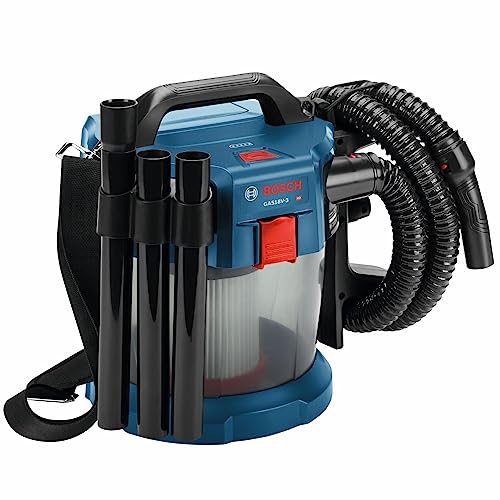
- Wet/dry cleanup with a 2.6-gallon capacity
- Washable HEPA filter and rotational airflow
- Includes hose, tubes, floor, and crevice nozzles
Best For: Mobile workshop and vehicle cleanup
Best Quiet Compact Pick
Festool CLEANTEC CT SYS HEPA Extractor

- 67 dB operation in a compact Systainer design
- 1000W motor with HEPA filtration
- Automatic tool activation and shoulder strap
Best For: Festool finish work and organized indoor jobsites
Quiet Heavy-Duty Performer

- 151 CFM airflow and 98 PSI static water lift
- Quiet 66 dB operation with anti-static system
- Long cord and hose plus tool-activation outlet
Best For: Heavy-duty workshop, garage, and construction cleanup
Battery-Powered Specialist
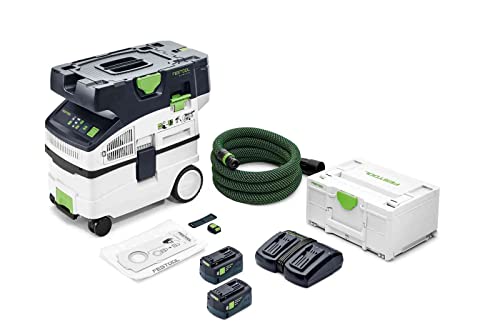
- Cordless operation from two 18-volt battery packs
- 36-volt turbine with three extraction levels
- Compact design with remote control and HEPA filter
Best For: Mobile Festool cordless-tool dust extraction
Automated Jobsite Control

- 150 CFM airflow with 97-inch static water lift
- Automatic filter cleaning every 15 seconds
- HEPA filtration and power-tool activation
Best For: Corded jobsite dust control and repetitive tool use
Best Portable Pick
DEWALT 20V MAX Universal Dust Extractor

- Compact 3.7-pound cordless design
- Included HEPA filter
- Wireless Tool Control compatibility
Best For: Portable drilling and chipping dust collection
Best High-Capacity Wet/Dry Pick
Makita VC4210L HEPA Dust Extractor

- 11-gallon wet/dry capacity
- 148 CFM suction power
- Automatic filter cleaning
Best For: Extended workshop and jobsite extraction
Best Jobsite Filtration Pick
DEWALT DWV010 HEPA Dust Extractor
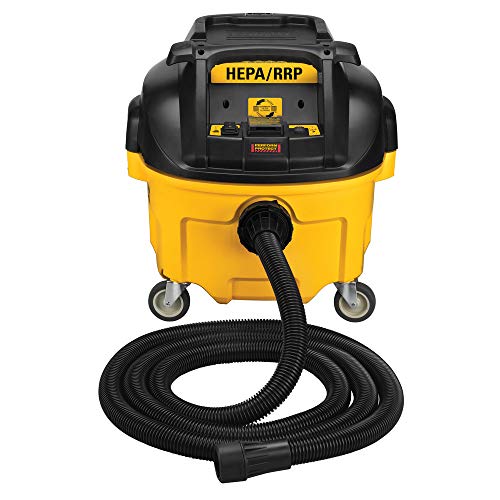
- Automatic filter cleaning every 30 seconds
- 150 CFM airflow from a 15-amp motor
- 8-gallon capacity with power-tool actuation
Best For: Continuous corded jobsite extraction
Best Compact HEPA Pick – Makita XCV11Z 18V LXT Dust Extractor
The Makita XCV11Z is a compact choice among cordless dust extractors for cleanup in workshops, garages, vehicles, and on jobsites. Its 18V brushless motor delivers 57 CFM, while the HEPA filter captures 99.97% of particles 3 microns and larger. Note that the battery and charger are sold separately.
Best For: Makita 18V LXT users who want a lightweight wet/dry extractor for portable cleanup.
Pros:
- Compact 2-gallon wet/dry design weighs about 10.1 pounds with a 5.0Ah battery.
- HEPA filtration and a filter-cleaning system help support fine-dust collection and suction efficiency.
- Offers up to 60 minutes of runtime with a compatible 18V LXT 5.0Ah battery.
- Includes a hose, upholstery nozzle, crevice nozzle, HEPA filter, and pre-filter set.
Cons:
- Battery and charger are not included.
- Its 2-gallon capacity is smaller than heavier-duty extractors.
- Listed working sound level is 76 dB(A).
This is a practical option when portability and compatibility with the Makita LXT platform matter more than maximum capacity. It is especially convenient for users who already own compatible batteries.
Best High-Capacity Jobsite Pick – DEWALT FLEXVOLT 60V Dust Extractor
The DEWALT DCV585B is a heavy-duty option among cordless dust extractors, delivering 125 CFM for demanding applications such as tuckpointing and surfacing when paired with an appropriate dust shroud. It includes dual filters, a HEPA filter, automatic filter cleaning, and wet/dry capability. The unit uses a FLEXVOLT battery, which is not listed as included.
Best For: Contractors handling demanding concrete, masonry, and renovation dust-collection tasks.
Pros:
- 125 CFM airflow supports OSHA Table 1-compliant solutions for specified applications when properly equipped.
- Automatic filter cleaning and dual filters help maintain performance during extended use.
- Wireless Tool Control enables remote or compatible-tool on/off operation.
- Includes an 8-foot anti-static hose with DEWALT AIRLOCK compatibility and built-in hose storage.
Cons:
- At 20 pounds, it is substantially heavier than compact cordless models.
- Battery availability and compatibility should be confirmed before purchase.
- Its listed noise level is 80 dB.
With its high airflow, filter cleaning, and wireless controls, the DCV585B is geared toward professional jobsite use rather than occasional household cleanup. Its larger, heavier design makes the most sense when performance takes priority over portability.
Best Versatile Shop Pick – Bosch GAS18V-3N 2.6-Gallon Vacuum
The Bosch GAS18V-3N combines cordless convenience with wet/dry cleanup, making it a versatile choice among cordless dust extractors for workshops, vehicles, and jobsites. Its rotational airflow design is intended to help maintain suction, while the washable HEPA filter captures 99.97% of fine particles. The battery and charger are sold separately.
Best For: Bosch AMPShare users who need a portable vacuum for fine dust, debris, and liquid spills.
Pros:
- 2.6-gallon wet/dry capacity provides more room than many compact extractors.
- Washable HEPA filter captures 99.97% of harmful particles such as drywall dust and sawdust.
- Includes a 5.25-foot hose, three extension tubes, floor nozzle, crevice nozzle, and bend.
- Lightweight 10.2-pound design includes onboard storage for the hose and nozzles.
Cons:
- Battery and charger are sold separately.
- Runtime is listed at up to 24 minutes with a 6.0Ah battery in high-power cleaning.
- Its listed noise level is 80 dB.
The Bosch is a balanced pick for users who want one cordless machine for both dry debris and water spills. Its accessory package and portable form make it well suited to mobile work, while the AMPShare platform broadens battery compatibility across supported tools.
Best Quiet Compact Pick – Festool CLEANTEC CT SYS HEPA Extractor
The Festool CLEANTEC CT SYS is a compact HEPA dust extractor designed for installation, remodeling, and finish work. Unlike the other cordless dust extractors in this roundup, it is a corded 120V model with a 1000W motor. Its Systainer format, shoulder strap, automatic tool activation, and 67 dB operation emphasize organized, quieter indoor work.
Best For: Festool users who prioritize compact storage, quiet operation, and automatic tool control.
Pros:
- Compact Systainer design supports easy transport, stacking, and storage.
- HEPA filtration pairs with a 1000W turbine for fine-dust collection.
- Automatic tool activation can start and stop the extractor with connected Festool tools.
- Quiet 67 dB operation and included shoulder strap suit indoor finish work.
Cons:
- It is corded rather than cordless, requiring access to a 120V outlet.
- The 0.92-gallon capacity is relatively small.
- Its compact format may be less suitable for high-volume debris collection.
The CT SYS is best viewed as a specialized portable extractor for controlled indoor work rather than a high-capacity shop vacuum. Choose it when the Festool Systainer ecosystem, automatic activation, and low operating noise are more important than cordless freedom.
Quiet Heavy-Duty Performer – Fein Turbo II
For shoppers comparing cordless dust extractors, the Fein Turbo II is a powerful wet/dry option for workshops, garages, and construction work where corded operation is acceptable. Its 151 CFM airflow, 98 PSI static water lift, anti-static system, and included accessories make it well suited to demanding cleanup and tool-connected extraction.
Best For: Heavy-duty workshop, garage, construction-site, and wet/dry cleanup applications.
Pros:
- Strong 1,100-watt motor with 151 CFM airflow and 98 PSI static water lift.
- Quiet 66 dB operation for more comfortable use.
- 19-foot power cord and 13-foot hose provide a broad operating range.
- Autostart outlet and anti-static functionality support tool use and safer fine-dust extraction.
Cons:
- It is corded rather than cordless.
- Its single power level offers less adjustment than some competing extractors.
The Fein Turbo II is a practical choice when suction, quiet operation, and extended reach matter more than battery freedom. Its wet/dry capability and tool-activation outlet add useful versatility for demanding workspaces.
Battery-Powered Specialist – Festool CTC MIDI I
Festool Cordless Mobile Dust Extractor CLEANTEC CTC MIDI I HEPA-Plus 577069+577079
Check Price On AmazonIf cordless dust extractors are your priority, the Festool CTC MIDI I delivers battery-powered mobility for sawing, sanding, and drilling. Its 36-volt turbine is designed to provide corded-like power, while three extraction levels, a compact form, and included remote control make it convenient for cordless-tool workflows.
Best For: Festool cordless-tool users who need portable dust extraction for sawing, sanding, or drilling.
Pros:
- Uses two 18-volt battery packs for cordless operation.
- 36-volt turbine is designed for power comparable to a corded extractor.
- Three extraction-power levels provide useful adjustment.
- Compact, mobile design includes a remote control and HEPA filter.
Cons:
- Listed runtime is only 16 minutes.
- Battery operation requires two compatible packs.
- At 76 dB, it is louder than some corded options in this group.
The Festool stands out for genuine cordless convenience and close integration with Festool battery tools. Its short listed runtime makes battery planning important, but its portability and adjustable extraction are valuable on mobile jobs.
Automated Jobsite Control – Bosch VAC090AH
Although it is not cordless, the Bosch VAC090AH is worth considering alongside cordless dust extractors when automatic filter cleaning and jobsite dust control are priorities. It combines 150 CFM airflow, 97 inches of static water lift, power-tool activation, and a HEPA system designed to capture 99.97% of particles at 0.3 microns or larger.
Best For: Corded jobsite and workshop users who need automatic filter cleaning, tool activation, and HEPA filtration.
Pros:
- Delivers up to 150 CFM airflow and 97 inches of static water lift.
- Automatic filter cleaning runs every 15 seconds to help maintain suction.
- Power-tool activation and Power Broker suction adjustment support controlled extraction.
- HEPA filter and included fleece filter bag support dry-dust containment.
Cons:
- It is corded and requires a 120-volt power source.
- It has a one-year limited warranty.
The Bosch is a strong alternative for users who can work near an outlet and want low-maintenance filtration. Its automatic cleaning cycle and tool activation make it especially practical for repetitive grinding, cutting, and dust-collection tasks.
Best Portable Pick – DEWALT 20V MAX Universal Dust Extractor
For cordless dust extractors that prioritize mobility, the DEWALT DWH161B is a compact 20V MAX solution designed for drilling and chipping applications. Its included HEPA filter, brushless motor, and strap or belt-hook mounting options make it practical for moving around a jobsite.
Best For: Portable dust collection with SDS-plus rotary hammers and other compatible tools.
Pros:
- Compact, lightweight 3.7-pound design for high mobility.
- Includes a HEPA filter and complies with OSHA Table 1 requirements.
- Wireless Tool Control can link the extractor and tool for remote activation.
- Multiple strap points and a belt hook support flexible positioning.
Cons:
- Tool-only design does not include a battery or charger in the supplied components.
- Its compact canister capacity is intended for portable use rather than high-volume cleanup.
The DWH161B is a strong choice when carrying comfort and tool-mounted dust control matter more than large capacity. It is especially suited to users already invested in the DEWALT 20V MAX system.
Best High-Capacity Wet/Dry Pick – Makita VC4210L HEPA Dust Extractor
The Makita VC4210L is a high-capacity alternative to smaller cordless dust extractors, offering an 11-gallon wet/dry canister and wheeled mobility. Its 12-amp motor, automatic filter cleaning, and HEPA filtration suit demanding workshop and jobsite cleanup.
Best For: Extended wet/dry extraction where large capacity and automatic filter maintenance are priorities.
Pros:
- Large 11-gallon capacity reduces the need for frequent emptying.
- 12-amp motor provides 148 CFM of suction power.
- Automatic filter cleaning helps support longer filter life.
- HEPA filtration captures 99.97% of particulates 0.3 microns and larger.
Cons:
- Corded power limits mobility compared with cordless models.
- At 35.3 pounds, it is substantially heavier than compact portable extractors.
The VC4210L is built for users who need capacity and sustained extraction rather than battery-powered portability. Its tool-activated outlet and 10-second shutoff delay add convenience when operating with power tools.
Best Jobsite Filtration Pick – DEWALT DWV010 HEPA Dust Extractor
The DEWALT DWV010 is a corded 8-gallon dust extractor focused on continuous jobsite operation. Automatic filter cleaning pulses every 30 seconds, while the 15-amp motor, HEPA filter, power-tool actuation, and 15-foot antistatic hose support demanding cleanup tasks.
Best For: Corded jobsite extraction with automatic filter cleaning and power-tool control.
Pros:
- Automatic filter cleaning helps maintain continuous operation.
- 15-amp motor delivers 150 CFM of airflow.
- Power-tool actuation controls the extractor with a connected tool.
- Heavy-duty wheels and casters improve jobsite maneuverability.
Cons:
- Corded operation is less mobile than cordless dust extractors.
- EPA RRP compliance applies only when DWV9330 filters are used.
- The 8-gallon capacity is smaller than the Makita VC4210L’s 11-gallon capacity.
The DWV010 offers a practical balance of capacity, airflow, and automated maintenance for stationary or wheeled jobsite use. Choose it when continuous corded performance is more important than battery-free portability.
How We Picked These Cordless Dust Extractors
We focused on practical dust-control features rather than headline power alone. The selected models represent several useful categories: compact extractors for finish work and mobility, higher-capacity units for demanding jobsites, and corded dust extractors that may suit users who need continuous runtime. We considered filtration, suction performance, container size, battery platform, tool activation, filter-cleaning systems, noise, portability, and compatibility with common power tools.
Because “cordless” can describe either a fully battery-powered extractor or a portable dust-control setup used alongside cordless tools, check each product’s power requirements carefully before buying.
Quick Comparison
- Best for maximum portability: Compact 18V and 20V extractors with smaller containers and lighter designs.
- Best for longer sessions: Larger-capacity models or corded extractors that avoid battery changes.
- Best for fine dust: HEPA-equipped units with sealed filtration and dependable automatic cleaning.
- Best for power-tool integration: Extractors with automatic tool activation, hose compatibility, and strong suction.
- Best for wet and dry cleanup: Wet/dry models with appropriate filters and liquid-shutoff protection.
Key Buying Factors for Cordless Dust Extractors
Battery Platform and Runtime
If you already own tools from Makita, DEWALT, Bosch, or another battery system, staying within that platform can reduce costs. Runtime depends on battery capacity, suction setting, hose resistance, and the material being collected. For extended work, plan on carrying a spare battery or choose a corded model.
Filtration and Dust Containment
HEPA filtration is especially important for fine particles from concrete, drywall, wood, and composite materials. Look for a sealed design, accessible replacement filters, and automatic or manual filter cleaning. A good filter cannot compensate for an open container, poorly fitted hose, or damaged seal.
Capacity, Suction, and Airflow
Small extractors are easier to carry but need more frequent emptying. Larger tanks help with production work but add weight. Airflow and sealed suction both matter: airflow supports debris collection, while suction helps maintain pickup through hoses and tool adapters.
Controls and Jobsite Convenience
Automatic tool activation, variable suction, hose storage, stackable cases, sturdy wheels, and a long hose can make more difference in daily use than a modest power increase. Also check whether batteries, chargers, hoses, adapters, and filters are included.
Who Should Buy Which Cordless Dust Extractors?
Choose a compact cordless extractor if you move between rooms, work from ladders, or mainly collect dust from drills, sanders, and small saws. Choose a high-capacity battery model if you need cordless freedom but perform heavier cutting or grinding. A corded HEPA extractor is usually the better choice for long production sessions, stationary tools, or maximum consistent suction. For wet cleanup, confirm that the model is designed for liquids and follow its filter and shutoff instructions.