The best rotary car polishers can remove oxidation, refine paint, and speed up waxing when you choose the right combination of power, pad size, and control. This roundup compares corded, cordless, rotary, dual-action, and mini polishers for different detailing jobs.
Whether you are correcting a full-size vehicle, maintaining a boat, or handling tight areas and light scratches, use the guide below to match the tool to your experience level and workspace.
Best 10 Rotary Car Polishers Picks for 2026
Professional Power
DEWALT DWP849X Corded Rotary Polisher

- 12-amp motor with speeds up to 3,500 RPM
- Durable gears and protective wool ingestion shield
- Includes backing pad and multiple handle options
Best For: Frequent detailing and larger vehicle surfaces
Precision Detailing

- 750W motor with 1,000–5,500 RPM control
- Three backing-plate sizes and extension shafts
- 27-piece pad and accessory kit included
Best For: Headlights, small parts, and hard-to-reach areas
Cordless Freedom
DEWALT 20V MAX XR Rotary Polisher
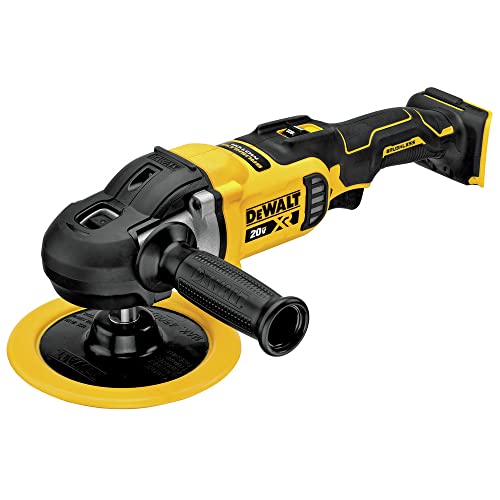
- Brushless 20V motor for cordless polishing
- 800–2,200 RPM variable-speed range
- Includes 7-inch backing plate and two handles
Best For: Mobile work and DEWALT 20V MAX battery users
Beginner-Friendly Correction
SPTA 5-Inch Dual-Action Polisher

- 750W dual-action motor with six speed settings
- Soft start and constant-power operation
- Includes pads, compounds, handles, and detailing accessories
Best For: DIY paint correction, waxing, and general detailing
Best Compact Pick

- Lightweight cordless design for tight spaces
- 300–950 RPM range for controlled detailing
- USB-C charging and multiple accessories
Best For: Spot polishing, badges, mirrors, and other confined areas
Best Corded Workhorse
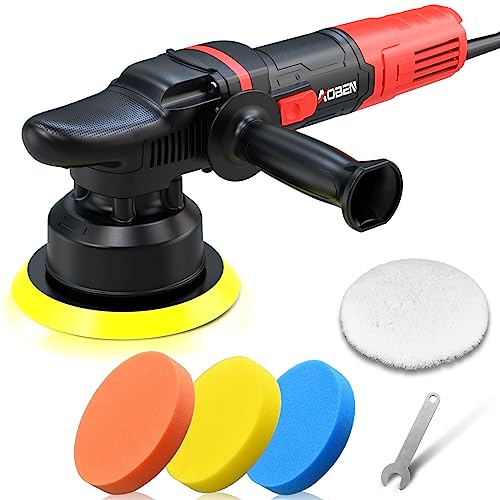
- 700-watt motor with six speed settings
- 6-inch pad supports faster panel coverage
- Multiple handles and pads included
Best For: Large-area car polishing, waxing, and paint correction
Best Cordless Full-Size Kit

- Two 21 V batteries support longer sessions
- 6-inch plate and 8 mm random orbit
- Six speeds plus varied pads included
Best For: Portable car detailing and larger polishing projects
Best All-Inclusive Kit

- 1200W motor with six speeds
- Multiple pad and backing-plate sizes
- Includes compounds and cleaning accessories
Best For: DIY detailers wanting a versatile starter bundle
Best for Heavy-Duty Versatility

- 1600W motor for demanding jobs
- Seven speeds up to 3,500 RPM
- Three grip configurations and varied pads
Best For: Heavy-duty automotive and multi-surface polishing
Best for Extended Use
GEVEELIFE 1600W Rotary Polisher

- Constant-power control for longer work
- Lightweight 4.5-pound design
- Two handles, speed lock, and two-year warranty
Best For: Home detailers prioritizing comfort and sustained operation
Professional Power – DEWALT DWP849X Corded Rotary Polisher
For demanding rotary car polishers work, the DEWALT DWP849X combines a 12-amp corded motor with variable trigger and dial control from 0 to 3,500 RPM. Its durable construction, interchangeable handles, and 7- or 9-inch accessory compatibility make it suited to larger detailing jobs.
Best For: Professional or frequent users who want a powerful corded polisher for larger vehicle surfaces.
Pros:
- 12-amp motor with variable speed control up to 3,500 RPM
- All-ball-bearing construction and precision-cut steel gears
- Includes hook-and-loop backing pad plus bale and straight side handles
- Wool ingestion shield, pop-off brushes, and a three-year limited warranty support long-term use
Cons:
- Corded design requires access to a 120-volt outlet
- At 6.7 pounds, it may feel heavy during extended polishing
The DWP849X is a strong choice when cutting power, durability, and broad speed control matter more than cordless convenience or a compact form.
Precision Detailing – SPTA Mini Rotary Polisher Kit
The SPTA Mini Polishing Machine is a compact option among rotary car polishers, pairing a 750W motor with six speed settings from 1,000 to 5,500 RPM. Its small backing plates and extension shafts are designed to help with narrow, detailed, and hard-to-reach areas.
Best For: Detailers working on headlights, door handles, small automotive parts, and tight spaces.
Pros:
- Includes 25mm, 50mm, and 76mm backing plates
- Three M14 extension shafts reach recessed and narrow areas
- 27-piece accessory kit includes wool and sponge pads in multiple sizes
- Rear speed dial, thumb switch, and side-handle options support controlled operation
Cons:
- Compact design is less suited to quickly covering large panels
- Corded operation limits mobility compared with a battery model
With its varied accessories and small-format design, this SPTA kit is particularly useful as a precision tool or complement to a full-size polisher.
Cordless Freedom – DEWALT 20V MAX XR Rotary Polisher
DEWALT 20V MAX* XR Cordless Polisher, Rotary, Variable Speed, 7-Inch, 180 mm, Tool Only (DCM849B)
Check Price On AmazonFor users who prefer cordless rotary car polishers, the DEWALT DCM849B offers a brushless motor and variable trigger and dial control. Its 800- to 2,200-RPM no-load range and 7-inch backing plate provide a practical setup for general polishing applications without a power cord.
Best For: Mobile detailers and DEWALT 20V MAX users who prioritize cordless maneuverability.
Pros:
- Brushless motor is designed for efficient performance and runtime
- Cordless 20V MAX platform improves mobility around the vehicle
- Variable trigger and dial provide control across the application
- Includes 7-inch backing plate, side handle, and bail handle
Cons:
- Tool-only package does not include a battery or charger
- Maximum no-load speed of 2,200 RPM is lower than some corded models
The DCM849B is a convenient pick when freedom from an extension cord is important, especially for shoppers already equipped with compatible DEWALT batteries.
Beginner-Friendly Correction – SPTA 5-Inch Dual-Action Polisher
The SPTA DAPSET-US is a dual-action random orbital machine rather than a rotary polisher, making it a useful alternative for shoppers comparing rotary car polishers with more forgiving paint-correction tools. Its 750W motor, six-speed dial, and included pads and compounds support waxing, polishing, and defect removal.
Best For: DIY users who want a versatile dual-action polisher for vehicle paint, waxing, and light restoration work.
Pros:
- Six-speed control covers 2,000 to 5,200 RPM
- Constant power and soft-start operation support steady handling
- Includes side and D-handles for different working positions
- Comprehensive kit includes pads, compounds, brushes, towels, gloves, and sanding discs
Cons:
- It is a dual-action random orbital design, not a true rotary polisher
- 110V corded operation limits use to locations with suitable power
This SPTA is a practical all-in-one choice for home detailing, particularly if you value controlled dual-action movement and a broad starter accessory package.
Best Compact Pick – Fanttik P10 Pro Mini
Among rotary car polishers, the Fanttik P10 Pro stands out for precise work in confined areas. Its cordless, 0.78-pound design and 2- to 3-inch pads are suited to mirrors, badges, door handles, and small scratch-treatment jobs rather than broad panels.
Best For: Detailers who need a lightweight polisher for tight spots, light polishing, sanding, waxing, and cleaning.
Pros:
- Compact 2- to 3-inch format supports precise detailing.
- Three variable speeds from 300 to 950 RPM and a low-speed design help produce a smooth finish.
- Cordless 4,000 mAh battery provides up to 50 minutes of use and charges via USB-C.
- Includes interchangeable backing plates, pads, sandpapers, and a cleaning brush.
Cons:
- Its mini size is less efficient for polishing large body panels.
- Its maximum speed and 14.4-watt-hour rating are aimed at detail work rather than heavy correction.
The Fanttik is a practical choice when portability and control matter more than coverage. Choose it for spot repairs and finishing work, not as a replacement for a full-size machine polisher.
Best Corded Workhorse – AOBEN 6-Inch Dual Action
For larger surfaces, the AOBEN is one of the more substantial rotary car polishers in this roundup. Its 700-watt corded motor, 6-inch backing plate, and random-orbit action are designed to cover vehicle panels efficiently while helping reduce swirl risk.
Best For: Home detailers who want a corded machine for polishing, waxing, sanding, and paint-defect removal across cars and other surfaces.
Pros:
- Six speed settings span 1,000 to 4,500 RPM for waxing, polishing, cleaning, and defect removal.
- Random-orbit action is intended to help achieve a swirl-free finish.
- Side and top handles offer multiple gripping positions and can reduce fatigue.
- Includes three foam pads, a synthetic wool pad, wrench, and 6-inch polishing disc.
Cons:
- At 6.8 pounds, it is considerably heavier than the cordless options here.
- The corded design limits mobility around the vehicle.
- The supplied notes indicate the machine may stop under excessive pressure at speeds 1–3.
The AOBEN makes sense when consistent corded power and broad coverage are priorities. Its heavier body and fixed power cord are trade-offs for longer detailing sessions and larger projects.
Best Cordless Full-Size Kit – Avhrit 6-Inch Buffer
The Avhrit combines full-size coverage with cordless convenience, making it a flexible option among rotary car polishers for driveway and mobile detailing. Its 6-inch plate, 8 mm random orbit, two batteries, and six speed settings are suited to polishing, waxing, sanding, and general surface care.
Best For: Beginners and mobile users who want a portable 6-inch polisher with spare-battery capability and varied pad options.
Pros:
- Two 21 V, 2.0 Ah batteries can be used alternately to reduce downtime.
- Six settings from 2,500 to 6,000 RPM support different applications.
- 8 mm random orbit is designed to help deliver a swirl-free finish.
- Includes foam, waffle, and knitted wool pads with hook-and-loop attachment.
Cons:
- Battery runtime is not specified in the supplied information.
- The 6-inch format is less precise for very small or confined areas than a mini polisher.
- Its maximum 6,000 RPM setting requires choosing the appropriate speed and pad for the surface.
The Avhrit is a strong fit when cordless freedom and coverage are equally important. Two batteries make it more practical for extended jobs, while the included pad selection adds versatility for first-time users.
Best All-Inclusive Kit – SPTA 7-Inch Rotary Polisher
For shoppers seeking rotary car polishers with plenty of accessories, the SPTA 7-inch model combines a 1200W motor with six selectable speeds from 500 to 3,000 RPM. Its broad kit is designed to help you handle polishing, buffing, sanding, and cleanup tasks with fewer extra purchases.
Best For: DIY detailers who want a versatile starter package with multiple pads, backing plates, compounds, and cleaning accessories.
Pros:
- 1200W motor and all-ball-bearing construction.
- Six variable speeds with digital speed indication, from 500 to 3,000 RPM.
- Includes 3-, 5-, 6-, and 7-inch backing plates plus assorted pads and compounds.
- Detachable side handle and D-handle provide two handling options.
Cons:
- The large accessory bundle may be more than casual users need.
- Its 7-inch format may feel less convenient in tight areas than a smaller polisher.
The SPTA stands out among rotary car polishers for its unusually complete accessory selection and broad speed range. It is a practical choice when flexibility and included supplies matter more than a minimalist setup.
Best for Heavy-Duty Versatility – LDHTHOPI 1600W Rotary Buffer
The LDHTHOPI is one of the more powerful rotary car polishers in this roundup, pairing a 1600W motor with seven speed settings from 1,000 to 3,500 RPM. It is built for demanding polishing, oxidation removal, sanding, and waxing jobs across several surfaces.
Best For: Users who need high power, multiple grip configurations, and pads suited to everything from deep scratches to light swirls.
Pros:
- 1600W motor for oxidation, scratch, and stain removal.
- Seven adjustable speeds from 1,000 to 3,500 RPM.
- Supports direct use, a D-handle, or a side handle.
- Includes foam and wool pads, two backing plates, sandpaper, and a storage bag.
Cons:
- Requires cooling breaks after 15 minutes of operation.
- The high-power design may be excessive for light touch-up work.
- Its speed range starts at 1,000 RPM, offering less low-speed control than some alternatives.
With its strong motor, three handling methods, and varied pad selection, the LDHTHOPI is suited to larger or tougher jobs. Follow the manufacturer’s pressure and cooling guidance to avoid overloading the motor.
Best for Extended Use – GEVEELIFE 1600W Rotary Polisher
The GEVEELIFE offers a strong option among rotary car polishers for users who value sustained operation and easier handling. Its 1600W motor includes constant-power control, while seven speeds from 1,000 to 3,500 RPM accommodate delicate sanding through stronger polishing work.
Best For: Home detailers seeking a relatively lightweight polisher with ergonomic handles, a speed-lock feature, and a two-year warranty.
Pros:
- 1600W motor with built-in constant-power control for extended operation.
- Seven variable speeds from 1,000 to 3,500 RPM.
- Weighs 4.5 pounds and includes detachable D- and side handles.
- Includes sponge pads, wool pads, and sandpapers for automotive and other surfaces.
Cons:
- Compatible polishing discs must use an M14 caliber, not 5/8-11.
- The included speed range does not go below 1,000 RPM.
- Accessory details are less extensive than the largest bundle in this roundup.
The GEVEELIFE balances power with handling features that can make longer projects more manageable. Its M14-only disc compatibility is the main specification to check before buying additional accessories.
How We Picked the Best Rotary Car Polishers
We focused on machines with useful speed control, practical pad sizes, comfortable handling, and accessories that support common detailing tasks. The selection includes full-size corded rotary polishers, cordless options, compact spot-correction tools, and dual-action models for buyers who want a more forgiving alternative.
We also considered motor output, operating range, included pads, battery or cord requirements, handle design, and whether each tool suits occasional home use or more demanding correction work. Because specifications and kits can vary by listing, confirm the included accessories and power format before ordering.
Quick Comparison
| Type | Best suited for | Main advantage | Trade-off |
|---|---|---|---|
| Full-size corded rotary | Paint correction and large panels | Consistent power and high capacity | Requires an outlet and more technique |
| Cordless rotary | Mobile detailing and driveway work | Freedom from a power cord | Battery runtime and charging limits |
| Mini rotary | Trim, narrow panels, and spot repairs | Precise access in tight areas | Slower on large surfaces |
| Dual-action polisher | Beginners and general maintenance | More forgiving paint movement | May remove defects more slowly |
Key Buying Factors for Rotary Car Polishers
Power and Speed Control
Higher wattage or amperage can help maintain pad speed under load, but raw power is not the only consideration. A broad variable-speed range lets you begin gently, spread compound evenly, and increase speed when appropriate. Soft start and a controllable trigger or dial are especially helpful for new users.
Rotary Versus Dual Action
A true rotary spins the pad on one axis and can correct defects quickly, but it also creates more heat and can leave visible holograms if used incorrectly. Dual-action machines move the pad in an additional orbit, making them generally safer for beginners and routine polishing. Choose rotary power when correction speed matters and you are prepared to manage pressure, pad choice, and panel temperature.
Pad Size, Ergonomics, and Accessories
Seven-inch pads cover broad panels efficiently, while five- and six-inch pads offer a useful balance of control and coverage. Mini tools are better for narrow pillars, trim, headlights, and isolated defects. Check for a side handle, loop handle, balanced body, replacement backing plates, and a useful assortment of cutting, polishing, and finishing pads.
Corded or Cordless Operation
Corded models are usually the better choice for long correction sessions because they provide continuous power. Cordless models are convenient around vehicles without nearby outlets, but extra batteries may be necessary for larger jobs. Verify battery compatibility and whether batteries and chargers are included.
Who Should Buy Which Rotary Car Polishers?
- Choose a full-size corded rotary if you regularly correct paint, work on boats or large vehicles, or want uninterrupted output.
- Choose a cordless rotary if portability and easy movement around the vehicle matter more than maximum session length.
- Choose a mini polisher for spot repairs, intricate trim, headlights, and areas where a standard backing plate is too large.
- Choose a dual-action model if you are new to machine polishing or prioritize a lower-risk tool for washing, polishing, and waxing.
Whichever style you select, test the compound and pad combination on a small, inconspicuous area first. Use clean pads, avoid holding the tool in one place, and monitor panel heat to reduce the risk of paint damage.