If you want faster home charging without overpaying for features you won’t use, the right Level 2 EV charger can make daily driving much easier.
This roundup focuses on practical picks for different homes, plug types, amperage needs, and smart-control preferences.
Best 10 Level 2 Ev Chargers Picks for 2026
Smart Plug-In Choice

- NEMA 14-50 plug for simpler installation
- ChargePoint app with reminders and controls
- UL-certified for indoor or outdoor use
Best For: Drivers who want a plug-in charger with strong app features
High-Speed Wall Charger

- Up to 50A / 12kW charging performance
- 25-foot cable stays flexible in cold weather
- Wi-Fi, Bluetooth, Ethernet, and OTA updates
Best For: Drivers who want a fast hardwired charger with app and network options
Hardwired Network Pick

- Hardwired J1772 charger for permanent installs
- ChargePoint app with reminders and data tracking
- UL-certified with indoor/outdoor support
Best For: Homeowners who want a trusted hardwired charger with app controls
Smart High-Power Home Charger
EMPORIA 48A WiFi Level 2 EV Charger

- 48A hardwired or 40A plug-in support
- WiFi app with scheduling and energy data
- UL listed, ENERGY STAR certified
Best For: Drivers who want a smart, high-output charger for home installation
Portable Adjustable Pick
EVDANCE 32A Portable Level 2 EV Charger

- Adjustable 16A to 32A output
- 25-foot cable with carry case and wall mount
- IP66 protection with LED charging display
Best For: Drivers who need a portable, adjustable charger for home or travel
App-Connected Wall Charger
EVIQO 40A NEMA 14-50 Level 2 EV Charger

- Up to 40A plug-in charging
- App scheduling and energy tracking
- IP66 / NEMA 4 sealed housing
Best For: Shoppers who want a plug-in wall charger with app control and weather resistance
Portable Power Pick
EVDANCE 40A 25ft Portable Level 2 Charger

- 10A to 40A adjustable output
- 25ft cable with carry accessories
- Delay start and TFT status display
Best For: portable home charging with adjustable speed and long reach
Smart Speed Upgrade
AIMILER 48A WiFi Level 2 EV Charger
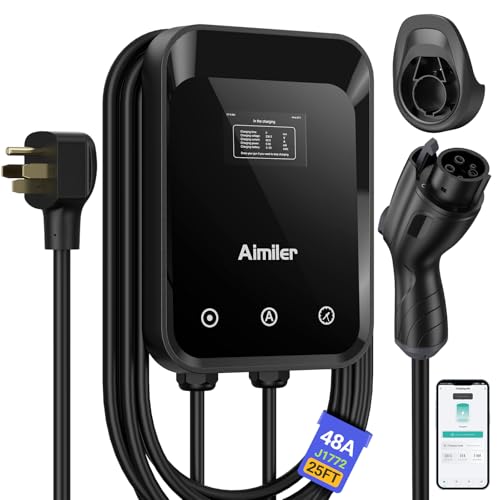
- Up to 48A and 11.5kW charging
- Wi-Fi app with scheduling and history
- 25ft cable with plug-charge or app mode
Best For: buyers wanting faster charging plus smart app controls
Editor’s Pick – EVIQO 48A Hardwired J1772 Charger
If you want level 2 ev chargers that are built for everyday home use, the EVIQO hardwired station is a strong all-around option. It supports most non-Tesla EVs with a J1772 plug, includes a long 25-foot cable, and can be installed on a dedicated 60A or 70A circuit depending on your setup.
Best For: Drivers who want a hardwired, app-connected charger with long cable reach and broad vehicle compatibility.
Pros:
- J1772 connector works with most non-Tesla EVs and plug-in hybrids; Tesla drivers can use their adapter.
- Up to 48A on a 60A circuit, with an option to unlock 50A on a 70A circuit.
- 25-foot cable helps reach across a garage or driveway.
- UL, ETL, FCC, and Energy Star certifications plus IP66 / NEMA 4 weatherproofing.
Cons:
- Hardwired installation requires a licensed electrician.
- Needs a 2.4 GHz WiFi network for app features.
- You’ll need to confirm your panel can support the required circuit.
This is a practical choice if you want a dependable home charger with strong safety credentials and useful app controls. The included holster, OTA updates, and three-year warranty add to its long-term value.
Smart Plug-In Choice – ChargePoint HomeFlex 14-50
Among level 2 ev chargers, the ChargePoint HomeFlex stands out if you want a trusted plug-in model with app support and broad ecosystem features. It uses a NEMA 14-50 plug, works with non-Tesla EVs through J1772, and can deliver charging speeds up to 9x faster than a 120V outlet.
Best For: Drivers who want a flexible plug-in charger with a well-known app and 24/7 support.
Pros:
- NEMA 14-50 plug makes installation simpler than hardwired units.
- ChargePoint app offers charging control, reminders, smart home connectivity, and station-finding features.
- UL-certified for safe home charging indoors or outdoors.
- Supports all non-Tesla EVs with J1772; Tesla owners can use an adapter.
Cons:
- Requires a 40A or 50A circuit and a 240V outlet with a 14-50 receptacle.
- Tesla drivers need an adapter.
- Plug-in design depends on having the right outlet already in place.
This is a good fit if you prefer a more straightforward setup and want the backing of a large charging network. Its feature set is especially appealing for drivers who like monitoring and managing charging from a phone.
High-Speed Wall Charger – Autel MaxiCharger AC Home
If speed matters in your search for level 2 ev chargers, the Autel MaxiCharger AC Home is built to deliver up to 50A and 12kW of power. It also includes Wi-Fi, Bluetooth, Ethernet access, and OTA updates, making it a strong pick for people who want modern smart-charging features in a weather-ready wall unit.
Best For: EV owners who want a fast hardwired charger with flexible connectivity and a long cable.
Pros:
- Up to 50A charging and about 37 miles of range per hour, depending on the vehicle.
- 25-foot cable stays flexible even in cold weather down to -40°C.
- CSA certified with NEMA Type 4 protection for indoor or outdoor use.
- App control, scheduling, Bluetooth, Wi-Fi, Ethernet, and OTA firmware updates.
Cons:
- Hardwired installation means you’ll need an electrician.
- Connector type details in the listing are inconsistent, so double-check compatibility before buying.
- Requires a setup that can support the charging circuit needs.
Overall, this Autel model is a compelling option if you want a fast charger with a premium feature list. The weather protection, smart controls, and three-year warranty make it a solid long-term home charging solution.
Hardwired Network Pick – ChargePoint HomeFlex 50A
If you’re comparing level 2 ev chargers for a permanent home setup, the hardwired ChargePoint HomeFlex is designed for reliability and smart control. It supports J1772-compatible non-Tesla EVs, connects with the ChargePoint app, and is rated for indoor or outdoor installation by an electrician.
Best For: EV drivers who want a hardwired charger with app control and trusted brand support.
Pros:
- Hardwired design for a permanent installation.
- ChargePoint app supports reminders, smart home integration, data tracking, and charging info.
- UL-certified and suitable for indoor or outdoor use.
- Up to 45 miles of range per hour, depending on the vehicle.
Cons:
- Requires an electrician for installation.
- WiFi is needed for some features and troubleshooting steps.
- Tesla owners need an adapter.
This model makes sense if you want a hardwired charger with a reputable app ecosystem and good support. Its adjustable charging range and Energy Star listing add to its appeal for efficient home charging.
Smart High-Power Home Charger – EMPORIA 48A WiFi Level 2 EV Charger
If you want a level 2 EV charger that can scale from plug-in convenience to higher hardwired speed, the EMPORIA unit is a strong home option. It supports up to 40A from a NEMA 14-50 outlet or up to 48A when hardwired, and its WiFi features let you track energy use and schedule charging from your phone.
Best For: Homeowners who want a flexible, smart charger with higher amperage potential and broad EV compatibility.
Pros:
- Up to 48A hardwired or 40A with the included NEMA 14-50 plug setup
- 2.4 GHz WiFi with real-time energy data and charging schedules
- 25-foot cable and J1772 connector work with most North American EVs
- UL listed and ENERGY STAR certified for added peace of mind
Cons:
- Professional installation is recommended for best safety and performance
- Hardwired operation requires the right setup to reach maximum output
Overall, this is a well-rounded pick if you want one of the more capable level 2 EV chargers for daily home use and like the idea of monitoring charging from an app. Its blend of output, safety certifications, and installation flexibility makes it especially practical for garages with a dedicated circuit.
Portable Adjustable Pick – EVDANCE 32A Portable Level 2 EV Charger
The EVDANCE model is a practical level 2 EV charger if you want flexibility more than fixed installation. It plugs into a NEMA 14-50 outlet, offers adjustable current from 16A to 32A, and includes a 25-foot cable plus a carry case for home use or travel.
Best For: EV owners who want a portable charger with adjustable amperage and easy storage.
Pros:
- Adjustable 16A/24A/32A output to match your circuit
- LED screen shows amperage, voltage, charging speed, and delay settings
- IP66 protection and a military-grade 25-foot cable
- Includes wall-mount bracket and carrying case for convenience
Cons:
- Tesla vehicles need a separate J1772-to-Tesla adapter
- Not recommended for direct sunlight or heavy rain exposure
This charger makes sense if you want a straightforward, portable way to charge at level 2 speeds without committing to a fixed wall unit. The adjustable current settings are especially useful for matching different breaker sizes and charging needs.
App-Connected Wall Charger – EVIQO 40A NEMA 14-50 Level 2 EV Charger
The EVIQO unit is a level 2 EV charger aimed at buyers who want easy plug-in installation and app-based control. It delivers up to 40A from a NEMA 14-50 outlet, includes a 25-foot cable, and adds scheduling plus energy tracking through its 2.4 GHz WiFi app.
Best For: Home users who want a plug-in charger with app control, a long cable, and strong weather protection.
Pros:
- Up to 40A output with no hardwiring required
- App control for start/stop, scheduling, reminders, and energy tracking
- UL, ETL, FCC, and Energy Star certified
- IP66 / NEMA 4 sealed housing for indoor or outdoor use
Cons:
- Requires a 240V NEMA 14-50 outlet and dedicated 50A circuit
- Needs 2.4 GHz WiFi for app features
For shoppers comparing level 2 EV chargers, this one stands out for its combination of easy installation and connected features. The long warranty and over-the-air updates also make it appealing if you want something that should stay useful over time.
Portable Power Pick – EVDANCE 40A 25ft Portable Level 2 Charger
If you want level 2 EV chargers with more control than a basic plug-in unit, the EVDANCE 40A model is built for flexible home and on-the-go charging. It uses a NEMA 14-50 plug, supports adjustable current from 10A to 40A, and includes a 25ft cable so you can reach larger garages or awkward parking spots more easily.
Best For: Drivers who want a portable Level 2 charger with adjustable amperage, a long cable, and simple timed charging.
Pros:
- Adjustable current from 10A to 40A lets you match charging speed to your setup.
- Up to 9.6kW output and 240V charging deliver much faster charging than Level 1 units.
- Delay start function supports 1- to 12-hour scheduling for off-peak charging.
- 25ft cable, carry bag, control box holder, and cable holder improve portability and storage.
Cons:
- Tesla owners need a separate J1772 adapter.
- It is a plug-in charger, so it depends on having the right NEMA 14-50 outlet available.
This is a practical pick if you want a straightforward portable charger with useful controls and weather-ready protection. The TFT display and safety protections add convenience, while the adjustable output makes it easier to use in different charging situations.
Smart Speed Upgrade – AIMILER 48A WiFi Level 2 EV Charger
Among level 2 EV chargers, the AIMILER 48A model is aimed at buyers who want higher-speed charging plus app control. It supports up to 11.5kW output, includes a 25ft cable, and can run in plug-charge mode or through a smart Wi-Fi app for scheduling and charge tracking.
Best For: Home users who want a faster Level 2 charger with app features, scheduling, and multiple installation options.
Pros:
- Up to 48A and 11.5kW output for high-speed charging when properly installed.
- Smart Wi-Fi app supports charging periods, cost checks, history, and full-charge notifications.
- Two operating modes: plug-charge or app start mode.
- 25ft military-grade cable and NEMA Type 4 protection add durability.
Cons:
- 48A use requires a 60A circuit breaker and professional installation is recommended.
- Tesla and NACS vehicles need a J1772 adapter.
- App setup depends on 2.4GHz Wi-Fi and may require factory reset steps.
This model stands out if you want more than a basic charger and value scheduling or usage tracking. It is a strong fit for homeowners who can support the electrical requirements and want a more connected charging experience.
Everyday Smart Pick – AIMILER 32A WiFi Level 2 EV Charger
If you are comparing level 2 EV chargers for everyday home use, the AIMILER 32A model keeps things simpler while still adding smart features. It uses a NEMA 14-50 plug, supports adjustable amperage from 16A to 32A, and includes Wi-Fi app control for scheduling and charging history.
Best For: Drivers who want a mid-range Level 2 charger with app control and a 25ft cable.
Pros:
- Adjustable charging from 16A to 32A works with 20A to 40A circuits.
- Wi-Fi app can track charging status, history, and off-peak charging periods.
- ETL and FCC listed with safety standards including SAE J1772 and UL 2594.
- 25ft cable and NEMA Type 4 protection add convenience and durability.
Cons:
- Tesla and NACS vehicles need a J1772 adapter.
- Using a 120V adapter drops charging speed significantly.
- Wi-Fi features require proper 2.4GHz setup and can involve reset steps.
This is a practical middle-ground option if you do not need the highest output but still want smart controls. Its lower power ceiling can be easier to match to a typical home circuit while still offering useful app-based scheduling.
How We Picked These Level 2 Ev Chargers
We prioritized charging speed, installation flexibility, safety certifications, cable length, smart features, and overall value. For Level 2 Ev Chargers, the best choice is usually the one that matches your electrical setup and daily driving habits, not simply the highest amperage.
Quick Comparison: Plug-In Vs Hardwired
Plug-in units are easier to install and move if needed, especially if you already have a compatible 240V outlet. Hardwired models typically offer a cleaner install and may be better for permanent garage setups. If you want portability, a NEMA 14-50 plug is often the most convenient option. If you want a fixed station with a streamlined look, hardwired can be the smarter buy.
Key Buying Factors for Level 2 Ev Chargers
Amperage and Charging Speed
Higher amperage can shorten charging time, but only if your vehicle accepts the rate and your electrical panel can support it. Many homes do well with 32A to 40A chargers, while 48A to 50A models suit drivers who want the fastest home charging available.
Cable Length and Mounting
A 25-foot cable is a strong all-around choice for garages with multiple parking positions or awkward outlet placement. Also check whether the charger is intended for indoor, outdoor, or both environments before you buy.
Smart Features and App Control
Wi-Fi or app connectivity can help with scheduling, usage tracking, and charge management. These features are useful if you want to charge during off-peak hours or monitor energy use more closely.
Connector and Vehicle Compatibility
Most of the best Level 2 Ev Chargers in this roundup use a J1772 connector, which works with many EVs and plug-in hybrids. If your vehicle uses a different standard, make sure compatibility is confirmed before purchase.
Who Should Buy Which Level 2 Ev Chargers?
Choose a hardwired charger if you want a dedicated home setup and higher amperage potential. Choose a plug-in model if you want simpler installation or may relocate the charger later. Budget-conscious buyers should look at lower-amperage options that still deliver dependable overnight charging, while heavy drivers and multi-EV households may benefit from higher-output smart chargers with longer cables.
In short, the best model depends on your panel capacity, parking layout, and how quickly you need to recover daily range. Matching those needs to the charger specs will get you the best long-term result.