A hot, poorly ventilated garage can make repairs, woodworking, workouts, and hobbies uncomfortable. The right fan helps move stale air, cool your work area, and improve comfort without taking up valuable floor space.
This roundup compares 10 garage fans across wall-mounted, portable, cordless, floor, drum, and air-mover designs so you can match airflow, controls, durability, and placement to your workspace.
Best 10 Garage Fans Picks for 2026
Cordless Jobsite Choice

- Cordless 20V MAX operation
- Variable speed up to 650 CFM
- Up to 4.5 hours of runtime
Best For: Mobile garage work and job sites
High-Airflow Floor Fan
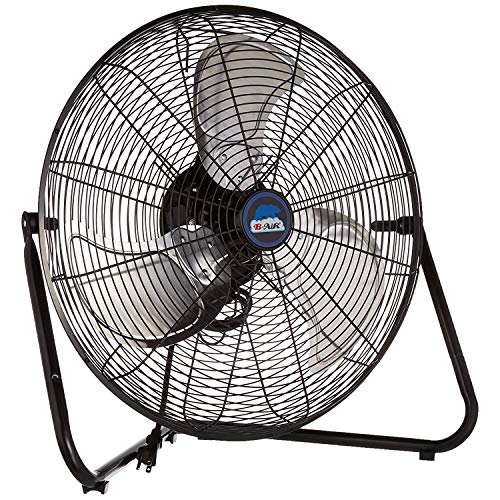
- 4,650 CFM listed airflow
- Three speeds with tilt adjustment
- Heavy-duty metal housing
Best For: Large garages and shops needing powerful circulation
Weather-Resistant Wall Fan

- 4,150 CFM wall-mounted airflow
- IP44 water-resistant construction
- Three speeds with vertical tilt adjustment
Best For: Garages and workshops needing fixed, elevated airflow
Heavy-Duty Airflow

- Up to 5,000 CFM
- 180° adjustable tilt
- Durable metal construction
Best For: Large garages and workshops needing portable high-volume airflow
Compact Utility Blower

- Up to 375 CFM
- Pivoting airflow control
- Two accessory outlets
Best For: Small garages, DIY work, and drying tasks
Best for Targeted Drying

- 550 CFM airflow and up to 42 MPH air speed
- Three speeds with three-position directional airflow
- Connectable, stackable, and portable design
Best For: Targeted drying and compact garage cooling
Best Everyday Garage Circulation
Amazon Basics 20-Inch High-Velocity Fan

- Up to 3,542 CFM airflow for large indoor spaces
- Metal housing with three aluminum blades
- Three speeds and adjustable tilt head
Best For: General garage and workshop air circulation
Versatile Wall-Mount Pick – Lasko 20-Inch High-Velocity Fan
For garage fans that can adapt to changing workspace needs, the Lasko 2264QM switches between floor and wall mounting. Its three speeds, pivoting head, and 2,750 CFM airflow suit general cooling and ventilation in larger areas.
Best For: Garages, attics, and workshops where flexible placement matters.
Pros:
- Converts between floor and wall mounting with the included bracket
- Three speeds and a pivoting head help direct airflow
- Tubular-steel construction and a metal blade cage support durability
- ETL listed with Lasko safety fuse technology and Blue Plug protection
Cons:
- At 68.2 dB, it may be noticeable in quiet spaces
- Manual controls offer no remote operation
- Indoor use is specified in the supplied details
This is a practical garage fan for buyers who want one unit that can sit on the floor or mount overhead. Its industrial construction favors utility over quiet operation or smart controls.
Cordless Jobsite Choice – DEWALT 20V MAX Portable Fan
Among garage fans, the DEWALT DCE512B stands out when portability and cordless operation are priorities. It delivers variable airflow up to 650 CFM, can stand freely or hang from its integrated hook, and runs for up to 4.5 hours with a suitable battery.
Best For: Cordless garage work, job sites, and areas without convenient outlets.
Pros:
- Battery-powered design avoids dependence on a power cord
- Variable-speed dial provides adjustable airflow up to 650 CFM
- Up to 4.5 hours of runtime with a compatible battery
- IP54-rated construction resists dust and water exposure
Cons:
- Battery and charger are sold separately
- Its 650 CFM output is lower than the larger corded fans here
- Plastic construction may be less substantial than all-metal models
This fan is a strong fit for moving between work areas or cooling a garage during projects. Existing DEWALT 20V MAX battery owners get the most convenient setup, while new buyers should budget for the battery system.
High-Airflow Floor Fan – B-Air Firtana 20-Inch Fan
The B-Air Firtana is a straightforward choice among garage fans when strong air movement is the main goal. Its 20-inch design is rated at 4,650 CFM and includes three speeds, a tilt-adjustable head, and a portable handle for directing airflow around a workspace.
Best For: Large garages, shops, and work areas that need high-volume airflow.
Pros:
- Rated airflow of up to 4,650 CFM
- Three speeds and an adjustable tilt head provide control
- Heavy-duty metal housing is designed for durability and maintenance access
- Can be used on the floor or hung on a wall
Cons:
- The supplied notes describe it as a loud white-noise option
- It uses a standard wall outlet rather than battery power
- Its 5-foot cable may limit placement in some garages
Choose this B-Air model if you value maximum listed airflow and a sturdy, uncomplicated design. It is less suited to buyers seeking quiet operation, remote controls, or cordless convenience.
Weather-Resistant Wall Fan – VEVOR 18-Inch 4150 CFM Fan
For permanently positioned garage fans, the VEVOR 18-inch wall fan combines a wall-mounted design with 4,150 CFM airflow. Its three speeds, vertical tilt adjustment, IP44 water resistance, and six-foot cord make it suitable for garages, workshops, and other utility spaces.
Best For: Garages and workshops needing powerful, elevated airflow with some water resistance.
Pros:
- Moves up to 4,150 CFM with a reach of around 30 feet
- IP44-rated design helps resist water exposure
- Metal construction with aluminum blades supports durability and cleaning
- Three speeds, pull-chain control, and vertical tilt adjustment
Cons:
- It should not be used in rain or exposed outdoor areas
- Installation is recommended on concrete or metal structures, not wooden walls
- Wall mounting sacrifices the portability of a floor fan
This VEVOR model makes sense when you want to keep floor space clear while circulating air across a garage. Its water resistance adds flexibility, but the installation and exposure limitations should be observed.
Heavy-Duty Airflow – DEWALT 20-Inch Floor Fan
For garages that need broad, forceful circulation, this DEWALT floor fan delivers up to 5,000 CFM from a durable 20-inch drum design. Its adjustable head and three speeds make it a practical choice for directing airflow across a work area.
Best For: Large garages, workshops, barns, and other spaces needing high-volume portable airflow.
Pros:
- Moves up to 5,000 CFM with three speed settings.
- 180-degree adjustable tilt helps aim airflow where needed.
- Metal construction, aluminum blades, rubber pads, and a carry handle support daily use.
- Includes a five-year limited warranty.
Cons:
- Floor-mounted design occupies workspace.
- At 18.7 pounds, it is less convenient to move than a compact blower fan.
- Its listed noise level is 60 dB.
This is a strong garage fan pick when maximum circulation matters more than a small footprint. Choose it for open areas where portable, adjustable high-volume airflow is useful.
Space-Saving Cooling – NewAir 18-Inch Wall Mount Fan
This NewAir wall-mounted garage fan keeps the floor clear while providing up to 3,000 CFM of airflow. With three speeds, adjustable tilt, and a sealed motor housing, it is designed for busy garages and workshops where permanent positioning is helpful.
Best For: Garages, workshops, warehouses, and commercial spaces where floor space is limited.
Pros:
- Wall-mounted design frees up valuable floor space.
- Delivers up to 3,000 CFM across three speeds.
- Adjustable tilt bar directs airflow without moving the fan.
- Sealed metal motor housing helps protect against dust, debris, and moisture.
Cons:
- Requires wall installation and suitable mounting support.
- Less portable once installed than a floor fan.
- Includes a one-year limited warranty.
Consider this garage fan if you want dependable airflow without sacrificing workspace. It is especially practical for a dedicated cooling position and offers mounting hardware for several wall types.
Compact Utility Blower – Lasko Pivoting Garage Fan
For targeted ventilation and drying, this compact Lasko blower fan offers three speeds, a pivoting head, and up to 375 CFM. Its carry handle and accessory outlets make it a versatile garage fan for smaller work areas, projects, and jobsite tasks.
Best For: DIY projects, drying floors or paint, contractors, mechanics, and smaller garages.
Pros:
- Compact, lightweight design is easy to carry between tasks.
- Pivoting fan head directs airflow for cooling, drying, and ventilation.
- Two grounded 120V accessory outlets add utility.
- ETL-listed design includes a circuit breaker, reset button, and 10-foot cord.
Cons:
- 375 CFM is substantially lower than the larger industrial fans listed here.
- Plastic construction may be less rugged than an all-metal drum fan.
- Its listed noise level is 57.6 dB.
This Lasko is a good fit when portability and directed airflow matter more than maximum coverage. Its smaller profile is convenient for moving around a garage and handling drying or spot-ventilation jobs.
Best for Targeted Drying – Vacmaster AM201 Air Mover Fan
For garage fans that can do more than circulate air, the Vacmaster AM201 is a compact air mover designed for targeted drying and cooling. Its three-speed settings, three-position design, and 550 CFM airflow make it useful for directing air toward specific areas rather than ventilating an entire garage.
Best For: Targeted drying, cooling work areas, and portable use where compact storage matters.
Pros:
- Three speeds and three-position airflow design help direct air where needed.
- Provides airflow up to 550 CFM with a maximum air speed of 42 MPH.
- Built-in receptacles allow up to three units to be connected for larger spaces.
- Portable, stackable design with a carrying handle supports transport and storage.
Cons:
- Its 550 CFM capacity is lower than that of larger industrial garage fans.
- The design is focused on directional drying rather than broad-area circulation.
The AM201 is a practical choice when you need controlled airflow for drying vehicles, floors, or equipment. Choose a larger high-velocity model if your priority is moving air across a whole garage.
Best Everyday Garage Circulation – Amazon Basics 20-Inch High-Velocity Fan
For dependable garage fans with a sturdy floor-standing design, the Amazon Basics 20-inch high-velocity fan delivers up to 3,542 CFM. Its metal housing, aluminum blades, three speeds, and adjustable tilt head make it suited to workshops, garages, gyms, and other large indoor spaces.
Best For: General garage circulation and cooling across medium-to-large indoor work areas.
Pros:
- Generates up to 3,542 CFM for strong air circulation.
- Metal construction and three aluminum blades are suited to demanding spaces.
- Three speed settings and an adjustable tilt head provide airflow flexibility.
- ETL-listed design and tool-free assembly support convenient setup.
Cons:
- It is a free-standing floor fan, so it requires usable floor space.
- The 20-inch format offers less airflow capacity than the larger 24-inch drum fan.
This model balances industrial-style construction with straightforward controls and setup. It is a strong all-purpose pick for circulating air around a garage or workshop without stepping up to the largest shop-fan format.
Best for Maximum Airflow – VEVOR 24-Inch 8700 CFM Drum Fan
Among garage fans built for demanding ventilation, the VEVOR 24-inch drum fan stands out with up to 8,700 CFM of airflow. It combines three speed settings, 360-degree tilting, a metal frame, and casters for moving substantial air through garages, workshops, warehouses, and other large spaces.
Best For: Large garages and workshops needing maximum airflow, flexible positioning, and easy mobility.
Pros:
- Delivers up to 8,700 CFM for powerful cooling, air exchange, and dust removal.
- Three speeds and 360-degree adjustable tilting provide control over airflow direction.
- Wide handle and smooth-rolling casters make the 22.7-pound fan easier to reposition.
- Metal construction, metal blades, and a powder-coated finish suit industrial use.
Cons:
- Its 24-inch drum format is larger and heavier than more compact floor fans.
- The included 5-foot cord may limit placement without an extension cord.
- Its high airflow may be more than needed for small garages or focused drying tasks.
The VEVOR is the strongest choice here for moving air through a large garage or shop. Its casters and broad tilt range improve usability, while the high CFM rating makes it better suited to whole-space ventilation than compact air movers.
How We Picked the Best Garage Fans
We focused on the features that matter most in a garage: airflow, speed control, adjustability, construction, portability, power source, and placement flexibility. The selection includes compact utility blowers, cordless shop fans, high-velocity floor models, wall-mounted units, and large drum fans for bigger spaces.
We also considered practical details such as motor protection, safety listings, water resistance where specified, cord length, carrying handles, runtime, and whether a fan can direct air across a workbench or through an open garage door. Published CFM ratings are useful for comparison, but they may be measured under different conditions, so they should not be treated as perfectly equivalent between brands.
Quick Comparison of Garage Fans
| Fan type | Best for | Main advantage | Potential limitation |
|---|---|---|---|
| Wall-mounted | Permanent garage cooling | Saves floor space | Less portable |
| Floor or drum fan | Large work areas | Strong, broad airflow | Uses valuable floor space |
| Cordless shop fan | Flexible job-site use | Works without an outlet | Runtime depends on the battery |
| Blower or air mover | Directed airflow and drying | Compact, focused output | Less suitable for whole-room circulation |
Key Buying Factors for Garage Fans
Airflow and Garage Size
For a small workspace, a compact high-velocity fan may be enough to cool a person or circulate air around a bench. Larger garages and open bays generally benefit from a higher-CFM drum or industrial fan. Use a lower setting when you want steady circulation and reserve maximum speed for rapid ventilation or heavier-duty cooling.
Placement and Adjustability
A tilt-adjustable head lets you aim airflow upward, across a vehicle, or toward an open door. Wall-mounted models are a good choice when floor space is limited, while portable fans with handles are easier to move between work areas. Check the mounting hardware and wall structure before installing a permanent unit.
Power, Noise, and Controls
Corded fans provide consistent output for long sessions, but require a convenient outlet and a safe cord path. Battery-powered models are more convenient for temporary setups and areas without power, though actual runtime varies with speed and battery capacity. Variable-speed controls make it easier to balance airflow and noise.
Durability and Safety
Metal housings and guarded blades are useful in demanding shop environments. Look for recognized safety listings, stable bases, protected switches, and suitable electrical ratings. Water-resistant construction can help in damp areas, but it does not make a fan safe for exposure to rain or standing water.
Who Should Buy Which Garage Fans?
- Choose a wall-mounted model if you want permanent airflow while keeping the floor clear.
- Choose a large drum fan if you need high-volume circulation in a spacious garage, workshop, or commercial area.
- Choose a cordless DEWALT fan if portability and outlet-free operation matter more than unlimited runtime.
- Choose a compact blower or air mover for focused cooling, drying, or directing air into tight spaces.
- Choose a mid-size floor fan for the most flexible balance of power, portability, and cost.
Before buying, measure your available space, identify the nearest outlet, and decide whether you need personal cooling or whole-garage air circulation. Those three factors usually narrow the options faster than airflow numbers alone.