The right floor jack makes routine maintenance safer, faster, and far less frustrating. Whether you service a compact car, pickup, SUV, or multiple vehicles, lifting range, rated capacity, clearance, and stability matter more than flashy specifications.
We compared 10 garage-ready hydraulic jacks across compact, low-profile, steel, aluminum-and-steel, and heavy-duty designs to help you choose a model that fits both your vehicles and your workspace.
Best 10 Floor Jacks for Home Garage Picks for 2026
Best Low-Profile Capacity
3-Ton Aluminum-Steel Racing Floor Jack
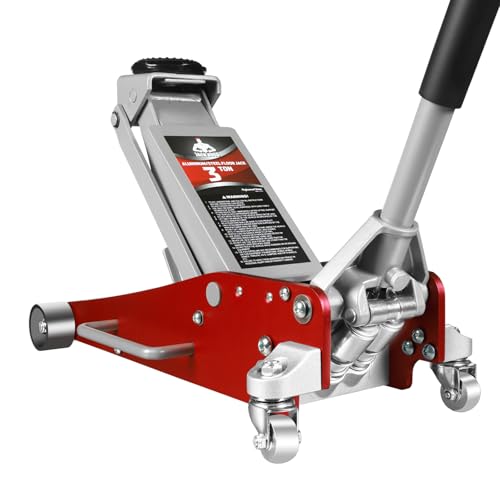
- 3-ton, 6,600-pound capacity
- 3-15/16-inch low-profile entry height
- Dual-piston pump and overload testing
Best For: Mixed vehicle garages needing extra capacity and low clearance
Best Starter Kit

- Includes floor jack and two ratchet stands
- 5.1- to 13-inch jack lifting range
- Overload protection and locking stand design
Best For: Car owners assembling a basic home-garage lifting setup
Best Heavy-Duty Steel Option
3-Ton Single-Piston Floor Jack

- 6,000-pound lifting capacity
- 5.5- to 18.5-inch lift range
- Steel build with overload protection
Best For: Standard cars, SUVs, minivans, and pickups
Best Basic Garage Jack
2-Ton Low-Profile Trolley Jack
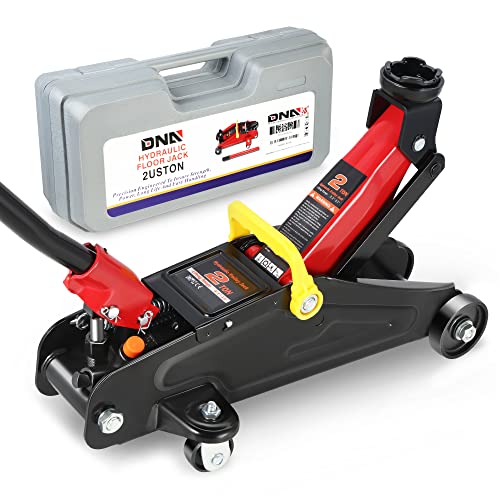
- 2-ton capacity for most cars
- 5.1- to 13-inch lift range
- Steel frame with casters and overload valve
Best For: Routine car maintenance in a compact home garage
Best Low-Profile Pick
Maxority 3-Ton Low-Profile Floor Jack

- 3-ton, 6,600-pound capacity
- RAPID PUMP dual-piston lifting system
- Extended reach for low-clearance vehicles
Best For: Lowered cars and sports-car maintenance
Best Maneuverability
LARBANKE 3-Ton Hydraulic Floor Jack

- 6,600-pound carbon-steel capacity
- Large saddle for added stability
- 360-degree swivel casters for positioning
Best For: Routine home-garage maintenance and tire changes
Best Lift Range
Jack Boss 3-Ton Low-Profile Floor Jack

- 3-1/8- to 20-inch lifting range
- Dual pumps for quicker lifting
- Slow-descent design and 6,600-pound capacity
Best For: Garage users servicing cars, trucks, and SUVs
Compact Garage Pick

- 4,000-pound capacity for cars and pickups
- 4.9- to 11.8-inch lifting range
- Includes blow-mold carrying case
Best For: Portable home-garage maintenance
High-Clearance Choice

- 6,600-pound alloy-steel capacity
- 7.1- to 20.9-inch lifting range
- Rubber pad and flat storage design
Best For: SUVs, trucks, and full-size vehicles
Heavy-Duty Upgrade

- 11,000-pound lifting capacity
- Dual-piston quick-lift pump
- 22-inch maximum lifting height
Best For: Heavy vehicles and demanding workshop work
Best Low-Profile Capacity – 3-Ton Aluminum-Steel Racing Floor Jack
For shoppers comparing floor jacks for home garage work, the Jack Boss combines a low entry height with 3-ton capacity. Its dual-piston pump, broad vehicle fit, and overload testing make it a versatile option for routine lifting and maintenance.
Best For: Sedans, SUVs, minivans, trailers, and other vehicles needing a low-profile 3-ton jack.
Pros:
- Low 3-15/16-inch minimum height fits vehicles with limited clearance.
- Dual-piston pump reduces the number of strokes needed to lift.
- Supports up to 6,600 pounds and was factory tested to 1.5 times its rated capacity.
- Aluminum body, welded steel frame, rubber saddle, and swivel casters balance durability and maneuverability.
Cons:
- At 58.5 pounds, it is not especially lightweight for carrying.
- Its 18-5/16-inch maximum height may not suit every lifted vehicle.
This is a strong all-around choice when garage space calls for a low-profile jack but your vehicles require more than a basic 2-ton model. The included one-year limited warranty adds some ownership reassurance.
Best Starter Kit – 2-Ton Jack and Stands Combo
This combo is a practical starting point for floor jacks for home garage maintenance because it includes both a hydraulic floor jack and two ratchet jack stands. The 2-ton rating is aimed at most cars rather than pickups, large SUVs, or trucks.
Best For: Home mechanics working on cars up to 4,000 pounds who need lifting and support equipment together.
Pros:
- Includes one low-profile floor jack and two adjustable jack stands.
- Jack lifts from 5.1 to 13 inches, while the stands adjust from 11 to 17 inches.
- Ratchet stands feature locking height adjustment and wide pyramid bases.
- Overload protection, a large saddle, and swivel casters support safer positioning.
Cons:
- Not recommended for pickups, trucks, or oversized SUVs.
- The 2-ton capacity limits it to lighter vehicles.
- The jack is for lifting only and must not be used as long-term support.
Its main advantage is convenience: the essential jack-and-stand combination comes in one package. Confirm your vehicle’s weight and clearance before buying, and always transfer the load to the stands for work underneath.
Best Heavy-Duty Steel Option – 3-Ton Single-Piston Floor Jack
Among floor jacks for home garage use, this AV Steel model emphasizes sturdy steel construction and a 6,000-pound rating. It fits standard cars, SUVs, minivans, and standard pickups, but its 5.5-inch minimum height rules out some low-clearance applications.
Best For: Owners of standard vehicles who prioritize a durable steel jack for tire, brake, oil, and suspension work.
Pros:
- 3-ton capacity supports up to 6,000 pounds.
- 5.5- to 18.5-inch lift range covers many standard vehicles.
- Heavy steel construction provides stability and long-term durability.
- Overload protection, a rotatable saddle, and rear rotating wheels aid safe handling.
Cons:
- At about 63.9 pounds, it is heavy to move and store.
- Its single-piston design may require more strokes than a dual-piston jack.
- It is not suitable for lifted vehicles, heavy-duty trucks, or RVs.
This model makes sense for a garage that values a solid steel build over portability. Check the manufacturer-recommended jack points, especially for EVs, where an adapter may be recommended.
Best Basic Garage Jack – 2-Ton Low-Profile Trolley Jack
If you need a straightforward option among floor jacks for home garage repairs, this 2-ton DNA Motoring trolley jack covers common car-lifting tasks without adding a stand set or extra accessories. Its low-profile design and swivel casters make positioning easier in a garage.
Best For: Cars up to 4,000 pounds needing a compact jack for routine garage service.
Pros:
- 2-ton capacity is suitable for most cars.
- 5.1- to 13-inch lift range handles common service tasks.
- Heavy-duty steel construction offers rigidity and stability.
- Swivel casters and an overload release valve support positioning and protection.
Cons:
- Not recommended for pickups, trucks, or oversized SUVs.
- Its 13-inch maximum height may be limiting for some jobs.
- The jack is for lifting only; separate jack stands are required for support.
This is a sensible choice when you want a basic, maneuverable trolley jack for a car-focused garage. Verify the vehicle weight and required lift height, and use properly rated stands before working underneath.
Best Low-Profile Pick – Maxority 3-Ton Low-Profile Floor Jack
For floor jacks for home garage use, the Maxority 3-Ton model is a practical choice when low ground clearance and faster lifting matter. Its low-profile design, extended reach, and RAPID PUMP technology suit routine maintenance on many cars, including lowered vehicles.
Best For: Sports cars, lowered vehicles, and home garages needing quick access and a 6,600-pound capacity.
Pros:
- Low-profile design and extended reach for limited-clearance vehicles
- RAPID PUMP system helps reduce the number of pump strokes
- High-strength steel construction with a built-in overload safety valve
Cons:
- Maximum lift height is 19.9 inches, so vehicle compatibility should be checked
- Color is supplied at random
- Includes a 90-day manufacturer warranty
With its combination of low access height, quick pumping, and sturdy steel construction, this Maxority jack is well suited to DIY users who regularly work on low vehicles. Confirm the lifting points and clearance requirements before purchase.
Best Maneuverability – LARBANKE 3-Ton Hydraulic Floor Jack
The LARBANKE 3-Ton hydraulic jack is a versatile option among floor jacks for home garage projects. It offers an 18.11-inch maximum lift, a large saddle for stability, and a wheel configuration designed to help position the jack around the vehicle.
Best For: Home garages and repair spaces handling tire changes, routine maintenance, and emergency lifting for compatible cars.
Pros:
- 3-ton, 6,600-pound lifting capacity
- Large 4.65-inch saddle is designed for greater stability
- Two steel casters and two 360-degree swivel casters support maneuverability
Cons:
- 5.31-inch minimum height may not suit very low vehicles
- Maximum lift height is 18.11 inches
- Its 20.5-kilogram weight may make carrying it less convenient
The LARBANKE emphasizes stable positioning and everyday versatility rather than ultra-low access. Its lifting range and caster layout make it a reasonable fit for general garage work, provided your vehicle’s lift points fall within the specified range.
Best Lift Range – Jack Boss 3-Ton Low-Profile Floor Jack
The Jack Boss 3-Ton floor jack stands out for its low 3-1/8-inch minimum height and 20-inch maximum lift. For floor jacks for home garage use, its dual-pump design, slow-descent feature, and steel construction provide useful support for car, truck, and SUV maintenance when specifications match.
Best For: DIY users who need a broad lifting range and a jack suitable for tire changes and general vehicle servicing.
Pros:
- 3-ton, 6,600-pound load capacity
- Low 3-1/8-inch entry height and 20-inch maximum lift
- Dual pumps provide quicker lifting, while slow descent helps protect the vehicle
- Four-wheel design includes two swivel casters for movement
Cons:
- At 31.3 kilograms, it is relatively heavy to move or store
- Vehicle parameters should be checked carefully before purchase
- Its iron construction and large dimensions may require dedicated storage space
The Jack Boss offers one of the broadest stated height ranges in this group, making it useful for both low-clearance access and taller lifting needs. Its weight may be a tradeoff, but the dual pumps and slow descent add practical convenience for garage work.
Compact Garage Pick – 2-Ton Hydraulic Trolley Jack
For routine lifting tasks, this 2-ton hydraulic trolley jack is a practical option among floor jacks for home garage use. Its steel construction, swivel casters, safety valve, and included blow-mold carrying case make it suited to basic vehicle maintenance on sedans and pickup trucks.
Best For: Home garages needing a portable jack for cars and pickup trucks.
Pros:
- 4,000-pound load capacity with a 4.9- to 11.8-inch lifting range.
- Hydraulic operation and swivel casters support easier lifting and positioning.
- Includes a blow-mold storage and carrying case.
Cons:
- Its 2-ton capacity is lower than the heavier-duty options in this roundup.
- The listed warranty is limited to 90 days.
This jack emphasizes portability and straightforward operation rather than maximum capacity. Confirm the vehicle’s clearance and weight before use, then rely on appropriate safety equipment when working underneath a raised vehicle.
High-Clearance Choice – 3-Ton Quick-Lift Floor Jack
This 3-ton alloy-steel jack is one of the more versatile floor jacks for home garage projects involving SUVs, trucks, crossovers, and vans. Its high-clearance design, quick-lift hydraulic system, rubber-padded saddle, and disassembling handle prioritize reach, control, and storage.
Best For: SUV and truck owners who need substantial lift height and a 6,600-pound capacity.
Pros:
- Lifts up to 6,600 pounds across a 7.1- to 20.9-inch range.
- Cross-shaped rubber pad helps provide a secure, non-slip hold.
- Quick-connect handle, smooth casters, and flat storage improve convenience.
Cons:
- The 7.1-inch minimum height may not suit lower-clearance sedans.
- Its listed vehicle compatibility focuses on SUVs and trucks, so fit should be measured carefully.
The AUTOWN stands out when lifting height matters more than compact low-clearance access. Measure the vehicle’s frame clearance before buying, particularly if you plan to use it on a sedan.
Heavy-Duty Upgrade – 5-Ton Low-Profile Floor Jack
For demanding maintenance, this 5-ton low-profile model offers substantial capacity and a 22-inch maximum lift. Its dual-piston quick-lift pump, long handle, steel construction, safety valve, anti-slip saddle, and rubber padding make it a serious option among floor jacks for home garage and workshop use.
Best For: Owners of heavier cars, trucks, and SUVs who want high lifting capacity.
Pros:
- 11,000-pound capacity with a maximum lifting height of 22 inches.
- Dual-piston pump is designed to reduce the strokes needed for lifting.
- Long handle provides leverage, while the saddle and rubber padding support stability.
Cons:
- At 100 pounds, it is substantially heavier than a compact garage jack.
- The listed warranty is limited to 90 days.
This Maxority is built for capacity and leverage rather than easy portability. Its low-profile style and heavy-duty construction can suit varied vehicles, but verify the jack’s fit and use suitable stands before performing work beneath a vehicle.
How We Picked the Best Floor Jacks for Home Garage Use
We focused on the specifications that have the biggest effect on real garage work: rated lifting capacity, minimum and maximum height, construction, pump design, portability, included accessories, and intended vehicle type. The selection includes 2-ton models for many sedans, 3-ton jacks for broader everyday coverage, and a 5-ton option for especially demanding lifting tasks.
Capacity is only one part of the decision. A jack should also reach the vehicle’s approved lift points, roll securely on the garage floor, and provide enough clearance for the work you plan to do. We treated dual-pump and quick-lift systems as useful convenience features, not substitutes for correct positioning and jack stands.
Quick Comparison
| Best For | Recommended Capacity | Useful Features |
|---|---|---|
| Compact and midsize cars | 2 tons | Low profile, easier storage, carrying case |
| Mixed household vehicles | 3 tons | Greater capacity, wider vehicle compatibility |
| Trucks and SUVs | 3 tons or more | Higher maximum lift, stronger steel construction |
| Heavy-duty workshop use | 5 tons | Extra capacity and robust frame |
Key Buying Factors for Floor Jacks for Home Garage
Capacity and Safety Margin
Choose a jack whose rated capacity comfortably exceeds the portion of the vehicle being lifted. A 2-ton jack can suit many cars, while a 3-ton model offers a more versatile margin for pickups and SUVs. Never rely on the jack alone: use properly rated jack stands on solid, level ground.
Lift Range and Clearance
Low-profile designs are valuable for sports cars and vehicles with limited ground clearance. Taller models are better for trucks and SUVs, but verify that the minimum height fits beneath the lift point and that the maximum height is sufficient for your repair.
Construction and Maneuverability
Steel jacks are generally durable but heavy. Aluminum-and-steel designs can reduce weight, while larger casters may roll more easily across a garage floor. Consider storage space, handle design, and whether you need to move the jack frequently.
Pad and Pump Design
A rubberized or cross-shaped saddle can help protect vehicle contact points and improve grip. Dual-piston or quick-lift pumps can reduce the number of strokes, especially when raising a vehicle from a low starting position.
Who Should Buy Which Floor Jacks for Home Garage?
Choose a 2-ton low-profile jack if you mainly maintain sedans, coupes, or compact vehicles and value easier storage. A 3-ton model is the best all-around choice for many home garages with a mix of cars, crossovers, and light trucks. For frequent SUV or pickup work, prioritize a higher maximum lift and a sturdy 3-ton design. A 5-ton jack makes sense for heavier vehicles or workshop-style use, provided its larger size and weight fit your garage.
Before purchasing, confirm your vehicle’s curb weight, approved lift points, ground clearance, and the jack’s published lift range. Pair the jack with matching stands, wheel chocks, and a firm work surface for a safer setup.