The right EV charging adapter can make the difference between convenient, reliable charging and a frustrating compatibility problem. This roundup compares 10 options spanning NACS-to-J1772 adapters, CCS fast-charging adapters, and portable Level 1/Level 2 chargers.
We focus on connector compatibility, electrical ratings, safety certifications, temperature protection, portability, and everyday charging needs so you can choose with greater confidence.
Best 10 Ev Charging Adapters with Temperature Sensors Picks for 2026
Best High-Amperage Pick

- Up to 80A and 240V
- Built-in temperature monitoring
- IP67 and UL 2252 certified
Best For: J1772 EV owners using Tesla AC chargers
Best Supercharger Access
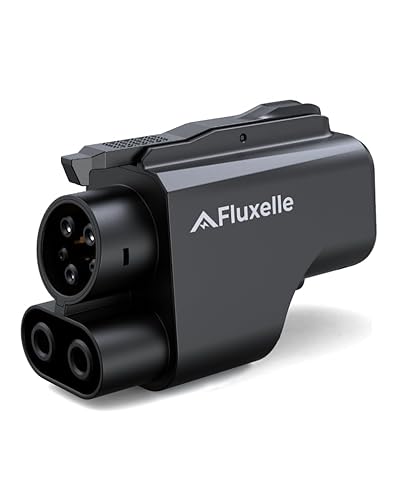
- Supports up to 500A and 1,000V
- Triple temperature monitoring
- UL 2252 certified with dual locking
Best For: CCS1 EV owners using compatible Tesla Superchargers
Best Portable Charger
ELEGRP 16A Dual-Voltage J1772 Charger

- Level 1 and Level 2 charging
- 25-foot cable with two plug options
- IP67 weather resistance
Best For: J1772 drivers charging at home from 120V or 240V
Best CCS Expansion for Tesla

- Access to 12,000+ CCS1 stations
- Automatic over-temperature shut-off
- Up to 500A and 1,000V
Best For: Supported Tesla and NACS EV owners using CCS1 fast chargers
Smart App-Controlled Pick
WiFi Level 1 & 2 Portable EV Charger

- App and LCD temperature monitoring
- 120V/240V dual-voltage charging
- Adjustable current and scheduling
Best For: Drivers wanting connected charging control and temperature visibility
High-Power Adapter Pick
Tesla to J1772 Adapter with LED Display
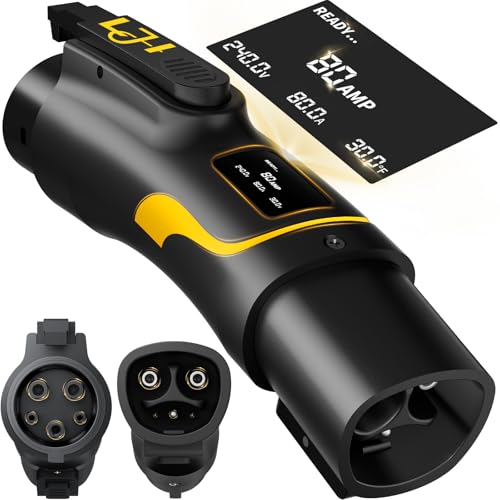
- LED temperature and charging readout
- Rated up to 80A and 250V
- Locking, portable plug-and-play design
Best For: J1772 drivers using compatible Tesla charging equipment
Simple Safety-Focused Pick
16A Dual-Voltage J1772 Charger

- ETL certified to UL 2594
- 120V/240V charging with adjustable 6–16A output
- 25-foot cable and delay timer
Best For: Drivers wanting simple, certified charging without app controls
High-Capacity Tesla Access

- Up to 80A and 200V rated input
- IP54 protection from -22°F to 122°F
- Carry bag, U.S. support, and 2-year warranty
Best For: Tesla drivers using J1772 Level 1 and Level 2 stations
Compact Weather-Resistant Pick
Inteset J1772 to Tesla Adapter

- 60A, 240V AC charging support
- IP54 water resistance and -22°F to 122°F operation
- Two-year warranty with U.S.-based support
Best For: Tesla owners wanting a compact J1772 charging adapter
High-Power J1772 Compatibility

- Up to 80A for AC Level 2 charging
- Overheat prevention and IP54 weather protection
- Carry bag plus 2-year warranty and U.S. support
Best For: J1772 EVs using compatible Tesla AC Level 2 equipment
Best High-Amperage Pick – Lectron NACS to J1772 Adapter
For J1772 vehicles that need access to Tesla destination and Level 2 charging equipment, this Lectron adapter is a practical option among ev charging adapters with temperature sensors. It supports up to 80A and 240V, includes built-in temperature monitoring, and is designed for indoor or outdoor use. Note that it is not compatible with Tesla Superchargers.
Best For: J1772 EV owners using Tesla Wall Connectors, Destination Chargers, or Mobile Connectors.
Pros:
- Supports up to 80A and 240V for high-speed Level 2 charging.
- UL 2252 certified with built-in temperature monitoring.
- IP67 protection and reinforced housing support outdoor use.
- Includes a two-year warranty.
Cons:
- Not compatible with Tesla Superchargers.
- Requires a J1772-compatible vehicle and compatible Tesla AC charging equipment.
Its high current rating and thermal monitoring make it compelling for demanding AC charging setups. Verify your vehicle and charger requirements before purchasing, especially if you need DC fast charging.
Best Supercharger Access – Fluxelle NACS to CCS1 Adapter
CCS1-equipped EV drivers seeking Tesla Supercharger access may find this Fluxelle adapter useful. It is one of the more feature-rich ev charging adapters with temperature sensors, offering triple temperature monitoring, dual locking, and support for up to 500A and 1,000V. Compatibility is limited to Tesla Superchargers V3 and V4 and supported vehicles.
Best For: CCS1 EV owners who need access to compatible Tesla Supercharger V3 and V4 locations.
Pros:
- Supports up to 500A, 1,000V, and charging rates up to 250 kW.
- Triple temperature monitoring and automatic charging lock improve safety features.
- UL 2252 certified with dual locking on both connector ends.
- Includes one-year replacement service and two-year customer support.
Cons:
- Compatible with Tesla Superchargers V3 and V4 only, according to the supplied notes.
- Vehicle compatibility must be verified before purchase.
- Charging speed depends on the vehicle and charging station.
This is a strong choice when fast DC access and layered safety monitoring matter most. Check your vehicle manufacturer guidance and charging permissions before relying on it for road trips.
Best Portable Charger – ELEGRP 16A Dual-Voltage J1772 Charger
This portable ELEGRP charger is a useful alternative to standalone ev charging adapters with temperature sensors for drivers who need a complete charging setup. It offers Level 1 and Level 2 operation, a 25-foot cable, and safety-focused PBE and LRC technology. Temperature-sensor functionality is not specifically stated in the supplied notes, so buyers should distinguish its protection features from dedicated thermal-monitoring adapters.
Best For: J1772 EV and PHEV owners who want flexible home charging from 120V or 240V outlets.
Pros:
- Supports 120V Level 1 and 240V Level 2 charging.
- Includes NEMA 6-20 and 5-15 adapter options.
- 25-foot cable provides useful reach for garages and outdoor setups.
- IP67 weather resistance and a two-year replacement warranty.
Cons:
- It is a charger rather than a vehicle-to-charger connector adapter.
- Charging is limited to 16A, with speed depending on the outlet.
- Tesla owners need a separate J1772-to-NACS adapter.
Its dual-voltage design and long cable make it convenient for everyday home charging. Choose it for charging flexibility, but look elsewhere if built-in temperature sensing is your primary requirement.
Best CCS Expansion for Tesla – Lectron CCS1 to NACS Adapter
Tesla and other NACS EV owners can use this Lectron adapter to connect to compatible CCS1 DC fast-charging stations. It fits the ev charging adapters with temperature sensors category through built-in thermal protection and automatic over-temperature shut-off, while supporting up to 500A and 1,000V. Tesla Cybertruck owners should note the stated incompatibility.
Best For: Tesla Model S, 3, X, and Y owners and supported NACS EV drivers seeking CCS1 fast-charging access.
Pros:
- Expands access to more than 12,000 CCS1 fast-charging stations, according to the supplied notes.
- Supports up to 500A, 1,000V, and a maximum stated rate of 500 kW.
- UL 2252 certified with thermal protection and automatic over-temperature shut-off.
- IP67-rated and tested for impact, crush, weather, and high-power cycles.
Cons:
- Not compatible with Tesla Cybertruck.
- Tesla vehicles must show CCS Adapter Support as enabled.
- Actual charging speed depends on the EV and charging station.
This adapter is well suited to Tesla drivers who want more DC fast-charging options beyond the NACS network. Confirm CCS support in the vehicle settings or owner’s manual before ordering.
Smart App-Controlled Pick – WiFi Level 1 & 2 Portable EV Charger
For shoppers seeking ev charging adapters with temperature sensors, this portable J1772 charger adds temperature visibility to a flexible Level 1 and Level 2 setup. Its app, LCD screen, adjustable current, and dual-plug design make it practical for home charging and travel.
Best For: EV owners who want app-based scheduling, remote monitoring, and compatibility with both 120V and 240V outlets.
Pros:
- Displays voltage, current, power, energy usage, and temperature on the LCD or app.
- Supports 120V NEMA 5-15 and 240V NEMA 6-20 charging.
- Offers adjustable current, scheduling, and multiple safety protections.
- Includes a long 25-foot cable and IP65 water resistance.
Cons:
- App setup may be unnecessary for shoppers seeking a simple plug-in charger.
- At 7.61 pounds, it is less lightweight than a basic compact unit.
This is a strong all-around option when temperature monitoring and smart controls matter as much as outlet flexibility. Its 12-month warranty and J1772 compatibility add practical reassurance.
High-Power Adapter Pick – Tesla to J1772 Adapter with LED Display
This Tesla-to-J1772 adapter is designed for non-Tesla EVs that need access to compatible Tesla charging equipment. Among ev charging adapters with temperature sensors, it stands out for its LED readout, which shows temperature along with voltage, current, and connection status.
Best For: J1772 EV drivers who want to use compatible Tesla High Power Wall Connectors, Destination Chargers, or Mobile Chargers.
Pros:
- Supports advertised power ratings up to 80A and 250V.
- LED display provides real-time voltage, current, temperature, and connection information.
- Includes an automatic safety lock, surge protection, and smart temperature control.
- Portable plug-and-play design with a stated three-year warranty.
Cons:
- Compatibility is limited to J1772 vehicles and compatible Tesla charging equipment.
- Actual charging speed depends on the connected charger and vehicle.
Choose this adapter when expanding access to Tesla destination-style charging is the priority. The integrated display makes operating status easier to check, while the locking design supports a secure connection.
Simple Safety-Focused Pick – 16A Dual-Voltage J1772 Charger
For buyers comparing ev charging adapters with temperature sensors, this portable J1772 charger offers a straightforward alternative to app-connected models. Its LCD reports charging information, while built-in overheating protection, ETL certification, and adjustable current support practical everyday use.
Best For: EV and PHEV owners who want dual-voltage charging, a long cable, and timer control without Wi-Fi or an app.
Pros:
- Works with 120V outlets or compatible 240V NEMA 6-20 outlets.
- Adjustable 6–16A current and a 1–10 hour delay timer offer useful control.
- ETL certified to UL 2594 with protection against overheating and other electrical faults.
- Includes a 25-foot cable, LCD display, and IP66 weather-resistant enclosure.
Cons:
- The LCD lists charging current, voltage, time, and energy, but the notes do not specifically state that it displays temperature.
- Tesla and other NACS vehicles require a compatible J1772 adapter.
This model is a good fit for shoppers who value certified protection and simple physical controls over smart features. Its dual-voltage design and extra-long cable also make it useful as a home or backup charger.
High-Capacity Tesla Access – ELEGRP J1772 to Tesla Adapter
For Tesla owners comparing ev charging adapters with temperature sensors, the ELEGRP J1772-to-NACS adapter emphasizes high current capacity, outdoor durability, and practical portability. It connects Tesla vehicles to Level 1 and Level 2 SAE J1772 charging stations and supports up to 80A.
Best For: Tesla drivers who want broader access to J1772 charging at home, work, and public locations.
Pros:
- Supports up to 80A charging and 200V rated input.
- IP54 weatherproof construction with an operating range of -22°F to 122°F.
- Includes a carry bag, U.S.-based support, and a two-year replacement warranty.
Cons:
- Designed for Tesla vehicles and SAE J1772 charging connections rather than universal EV use.
- The supplied specifications do not explicitly confirm a built-in temperature sensor.
Its high current rating and broad temperature range make it a practical travel adapter, while the included bag and warranty add everyday convenience. Confirm that your vehicle and charging setup are compatible before purchase.
Compact Weather-Resistant Pick – Inteset J1772 to Tesla Adapter
The Inteset adapter is a compact option for Tesla owners seeking wider access to J1772 charging. Among ev charging adapters with temperature sensors, its documented strengths are a 60A rating, IP54 water resistance, and operation across a broad temperature range.
Best For: Tesla owners who prioritize a compact adapter for Level 1 and Level 2 charging stations.
Pros:
- Works with SAE J1772 chargers and compatible extension cables.
- Rated for up to 60A and 240V AC.
- IP54 water resistance and operation from -22°F to 122°F.
- Includes U.S. support and a two-year warranty.
Cons:
- Must be pressed firmly into place during connection.
- For Tesla vehicles only.
- The supplied details do not state that it includes a temperature sensor.
This adapter offers a straightforward way to expand Tesla charging access without much bulk. Its 60A limit is lower than some 80A alternatives, but it should suit many Level 1 and Level 2 charging situations.
High-Power J1772 Compatibility – ELEGRP Tesla to J1772 Adapter
This ELEGRP NACS-to-J1772 adapter is intended for EVs with J1772 receptacles that need access to Tesla High Powered Connectors, Destination Chargers, or Mobile Connectors. For shoppers reviewing ev charging adapters with temperature sensors, the supplied notes highlight overheat prevention, an 80A capacity, and IP54 protection.
Best For: J1772-equipped EV owners using compatible Tesla AC Level 2 charging equipment.
Pros:
- Supports up to 80A and 200V to 250V for Level 2 charging.
- Designed with effective overheat prevention.
- IP54 weatherproof design and operation from -22°F to 122°F.
- Includes a carry bag, U.S.-based support, and a two-year replacement warranty.
Cons:
- Designed exclusively for AC Level 2 charging.
- Compatibility is limited to EVs equipped with a J1772 receptacle.
- The notes mention overheat prevention but do not explicitly confirm a temperature sensor.
With its 80A capacity and stated overheat-prevention design, this is the higher-output choice for compatible J1772 EVs. Verify your vehicle receptacle and the Tesla charging equipment you plan to use before ordering.
How We Picked the Best Ev Charging Adapters with Temperature Sensors
We evaluated the selected products by matching their connector standards, advertised voltage and amperage limits, charging level, portability, and safety information. We also looked for practical details such as UL or ETL certification, adjustable current settings, cable length, plug flexibility, display or app controls, and stated temperature-monitoring or overheat-protection features.
Ratings alone do not guarantee compatibility. Always confirm your vehicle’s inlet, the charger’s connector, the circuit capacity, and the adapter’s specific limitations before charging. A high-amperage adapter should never be used to justify drawing more current than the vehicle, EVSE, outlet, or wiring supports.
Quick Comparison
| Type | Best suited to | What to check first |
|---|---|---|
| NACS to J1772 | J1772 vehicles using Tesla AC equipment | AC rating, Tesla equipment compatibility, and latch fit |
| J1772 to NACS | Tesla and NACS vehicles using J1772 chargers | Vehicle support, current limit, and weather protection |
| CCS to NACS | NACS vehicles using CCS DC fast chargers | Vehicle software support, certification, and DC rating |
| Portable Level 1/2 EVSE | Home, travel, and backup charging | Outlet type, circuit rating, current adjustment, and thermal safety |
Key Buying Factors for Ev Charging Adapters with Temperature Sensors
Connector and Charging Standard
Identify whether you need an AC adapter between J1772 and NACS or a DC fast-charging CCS-to-NACS adapter. These are not interchangeable. A CCS adapter designed for DC fast charging should not be treated as a substitute for an AC home-charging adapter.
Temperature Sensing and Protection
Temperature sensors can detect heat at the plug, cable, or control box and help reduce charging power or stop charging when conditions become unsafe. Look for clear documentation about where temperature is monitored, how the unit responds to overheating, and whether the product includes recognized safety certification. Keep plugs clean, fully seated, and free of extension cords unless the manufacturer specifically permits them.
Electrical Limits and Outlet Fit
Match the adapter’s maximum amperage and voltage to the lowest-rated component in the system. Portable chargers with NEMA 5-15 or 6-20 plugs have different circuit requirements, while an 80A-rated adapter may still be limited by the connected EVSE or vehicle. Use a properly installed circuit and consult an electrician for higher-power setups.
Convenience and Durability
For travel, consider cable length, weight, storage, weather resistance, current adjustment, timer functions, displays, and app control. A certified adapter with fewer features may be a better choice than a feature-rich model with unclear documentation.
Who Should Buy Which Ev Charging Adapters with Temperature Sensors?
Choose a NACS-to-J1772 adapter if you drive a J1772 vehicle and regularly use Tesla AC destination chargers or wall connectors. Choose a J1772-to-NACS adapter if you own a Tesla or another NACS vehicle and need access to public or home J1772 equipment. CCS-to-NACS models are for compatible NACS vehicles that support CCS DC fast charging; verify vehicle requirements before purchase.
A portable Level 1/Level 2 EVSE is the better choice for drivers who need a complete charging unit rather than a connector converter. Look for adjustable amperage and temperature protection when using multiple outlets or charging away from home. If you are uncertain about connector standards, circuit capacity, or sensor claims, prioritize a clearly certified model and confirm details with the vehicle and charger manufacturers.