Choosing the right car polisher for paint correction can make the difference between a controlled, glossy finish and costly paint damage. The best option depends on your correction goals, experience, panel size, and preferred power source.
We compared dual-action, rotary, cordless, and compact polishers alongside essential compounds, pads, and complete detailing kits to help you find a practical match for light swirl removal, deeper defect correction, or occasional weekend detailing.
Best 10 Car Polisher for Paint Correction Picks for 2026
Best Value DA Kit
SPTA 5-Inch Dual Action Polisher

- 750W motor with six adjustable speeds
- Includes pads, compounds, towels, and bag
- Dual-action design for swirls and oxidation
Best For: DIY detailers wanting a complete starter kit
Best Cordless Power
DEWALT 20V MAX XR Rotary Polisher
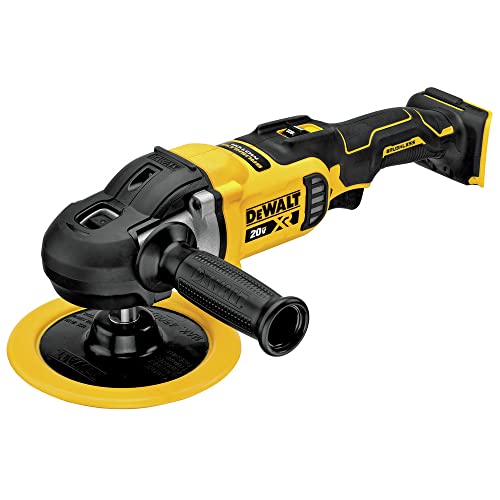
- Brushless cordless motor
- 800–2,200 RPM variable speed
- 7-inch backing plate; tool only
Best For: DEWALT 20V users needing portable polishing
Best Two-Step Compound Set
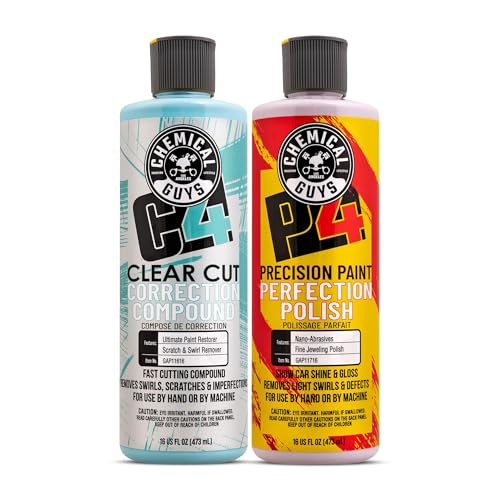
- C4 cuts common paint defects
- P4 refines gloss and clarity
- Works by machine or hand
Best For: Users who already own a polisher
Best Classic Orbital
PORTER-CABLE 7424XP 6-Inch Polisher

- 2,500–6,800 OPM variable speed
- Random-orbit polishing action
- Includes pad, side handle, and wrench
Best For: Controlled corded sanding and polishing
Three-Step Correction System

- Three compounds for staged correction
- Targets scratches, swirls, and holograms
- Finishes with mirror-like gloss
Best For: Multi-stage paint correction with existing polishing equipment
Complete Machine Kit

- Includes polisher, pads, compounds, and polish
- 700W random-orbital machine
- Designed for beginner-friendly correction
Best For: All-in-one machine polishing and detailing
Single-Compound Solution

- Removes scratches, swirls, and oxidation
- Works by hand or with a dual-action polisher
- Designed for clear coats and gloss paints
Best For: Targeted DIY paint correction
Balanced DIY Choice
AOBEN 6-Inch Dual Action Polisher
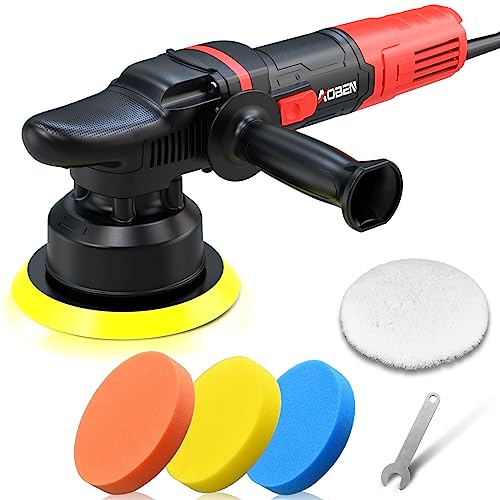
- Dual-action motion for polishing and waxing
- Six speeds from 1,000 to 4,500 rpm
- Includes four polishing pads and two handle options
Best For: DIY detailers handling general paint care
High-Power Correction Pick

- 1600W motor for oxidation and scratch removal
- Seven speeds from 1,000 to 3,500 rpm
- Includes pads, sandpapers, and a two-year warranty
Best For: Heavy-duty, extended polishing sessions
Detailing Access Specialist
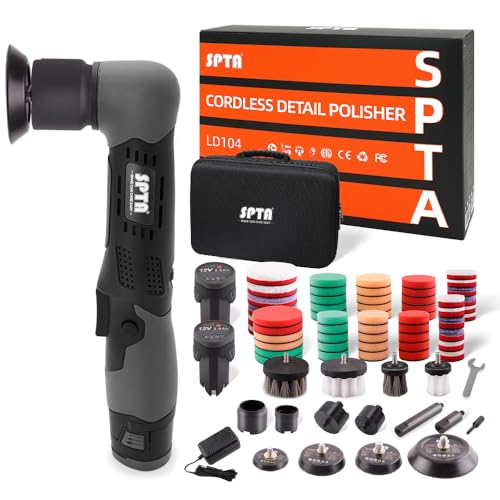
- Cordless 12V design for portable detailing
- 25mm, 50mm, and 80mm backing plates
- Includes two batteries and a large pad assortment
Best For: Tight areas, emblems, and body-line correction
Best Value DA Kit – SPTA 5-Inch Dual Action Polisher
If you want a complete car polisher for paint correction setup, the SPTA DAPSET-US combines a 750-watt dual-action machine with pads, compounds, towels, and sanding discs. Its six-speed range supports waxing, polishing, and defect removal.
Best For: DIY detailers who want an all-in-one dual-action polishing kit.
Pros:
- Six speeds from 2,000 to 5,200 RPM for different detailing tasks
- Dual-action movement is designed for removing swirls, scratches, and oxidation
- Includes 5- and 6-inch pads, coarse and fine compounds, towels, and a storage bag
- Side and D-handle options support a more comfortable grip
Cons:
- Corded 110-volt design requires access to an outlet
- The extensive accessory set may be more than occasional users need
With constant-power electronics and a smooth start, this SPTA kit offers useful control for beginners working through a paint-correction project.
Best Cordless Power – DEWALT 20V MAX XR Rotary Polisher
DEWALT 20V MAX* XR Cordless Polisher, Rotary, Variable Speed, 7-Inch, 180 mm, Tool Only (DCM849B)
Check Price On AmazonThe DEWALT DCM849B is a cordless car polisher for paint correction built around a brushless motor and 7-inch backing plate. Its trigger and dial controls provide variable-speed adjustment for different polishing applications.
Best For: Detailers who prioritize cordless mobility and already use DEWALT 20V MAX batteries.
Pros:
- Brushless motor is designed for efficient performance and runtime
- Variable-speed trigger and dial offer control from 800 to 2,200 RPM
- 7-inch backing plate suits many polishing applications
- Front grip and side-handle options support different handling preferences
Cons:
- Sold as a tool only, so a compatible battery and charger are not included
- Rotary operation may require more careful control than a dual-action machine
This model is a practical choice for cordless workflows, especially for users who already have the DEWALT 20V MAX battery platform.
Best Two-Step Compound Set – Chemical Guys C4 & P4 Kit
The Chemical Guys C4 and P4 kit supplies the correction liquids for a car polisher for paint correction workflow. Use C4 to cut scratches, swirls, oxidation, towel marks, and etching, then follow with P4 to refine gloss and reduce micro-marring.
Best For: Enthusiasts and detailers who need a straightforward two-step compound-and-polish process.
Pros:
- Two-step system separates defect removal from final refinement
- C4 is formulated to address scratches, swirls, oxidation, and etching
- P4 is intended to improve depth, gloss, and color vibrancy
- Can be applied by dual-action machine, rotary, or hand
Cons:
- This is a compound and polish set, not a polishing machine or pad kit
- Paint correction results depend on the applicator, technique, and defect severity
For shoppers who already own a compatible polisher, the C4/P4 pairing provides a clearly sequenced approach from cutting to finishing and is listed as suitable for clear coat, single-stage, and ceramic-coated vehicles.
Best Classic Orbital – PORTER-CABLE 7424XP 6-Inch Polisher
The PORTER-CABLE 7424XP is a corded orbital car polisher for paint correction with a 6-inch pad capacity and electronic variable-speed dial. Its random-orbit action is designed for swirl-free sanding and polishing, making it a versatile option for detailing and related finishing work.
Best For: Users seeking a proven corded orbital polisher for controlled sanding and polishing.
Pros:
- Electronic variable-speed dial adjusts from 2,500 to 6,800 OPM
- Random-orbit action is designed for swirl-free polishing
- Includes a polishing pad, side handle, and wrench
- Comes with a 5-inch counterbalance for 6-inch sanding or polishing pads
Cons:
- Corded AC design limits portability
- Only basic accessories are included compared with a full detailing kit
The 7424XP makes sense for buyers who value adjustable orbital control and a familiar 6-inch format over cordless convenience or bundled compounds.
Three-Step Correction System – Menzerna Polishing Set
For a thorough car polisher for paint correction workflow, the Menzerna Polishing Set provides three compounds for moving from defect removal to final gloss. Its coarse, medium, and very fine stages are suited to enthusiasts or professionals who want a structured process.
Best For: Multi-stage scratch, swirl, and finish correction.
Pros:
- Includes HCC1000, MCC2500, and Super Finish 3800.
- Progresses from light scratch and swirl removal to hologram refinement.
- Final step is designed to create a deep, mirror-like gloss.
Cons:
- Requires three separate polishing stages.
- Does not include a polisher or polishing pads.
This is a strong choice when you already have the equipment and want a complete compound sequence rather than a single correction product.
Complete Machine Kit – Chemical Guys TORQX Polisher
The Chemical Guys TORQX is a practical car polisher for paint correction when you want the machine, pads, compounds, and polish in one package. Its random-orbital design, ergonomic build, and included nine-piece setup make it approachable for beginners while remaining useful for experienced detailers.
Best For: Beginners and pros seeking an all-in-one machine polishing kit.
Pros:
- Includes the polisher, pads, compounds, and polishes.
- 700W motor and random-orbital throw support controlled correction.
- Suitable for paint, clear coat, headlights, wheels, and more.
- Designed to remove light scratches, swirls, oxidation, and haze.
Cons:
- Corded operation limits mobility compared with cordless tools.
- The listed manufacturer warranty is 30 days through Amazon.
Choose this kit if you need a ready-to-use starting point and do not want to purchase the machine, pads, and polishing products separately.
Single-Compound Solution – Meguiar's Ultimate Compound
Meguiar’s Ultimate Compound is a straightforward option for car polisher for paint correction projects that need one versatile correction compound. It is formulated to address scratches, swirls, oxidation, and water spots while restoring clarity on gloss paint and clear coats.
Best For: DIY defect removal by hand or with a dual-action polisher.
Pros:
- Targets scratches, swirls, oxidation, and water spots.
- Can be applied by hand or with a dual-action polisher.
- Designed to be clear-coat safe without hazing gloss paints.
- Restores color, clarity, and shine with micro-abrasive technology.
Cons:
- It is a compound only, not a complete polishing kit.
- Does not include a machine, pads, or finishing polish.
This compact 15.2-ounce bottle makes sense for targeted DIY correction, especially if you already own a suitable polisher or prefer to work by hand.
Balanced DIY Choice – AOBEN 6-Inch Dual Action Polisher
If you want a versatile car polisher for paint correction, the AOBEN combines dual-action movement with six adjustable speeds from 1,000 to 4,500 rpm. Its included pads and multiple handle options make it practical for polishing, waxing, sanding, and removing oxidation.
Best For: DIY detailers who want a corded dual-action polisher for general paint care and finishing work.
Pros:
- Dual-action random orbital motion is designed to help produce a swirl-free finish.
- Six speed settings suit waxing, polishing, cleaning, and paint-defect removal.
- Includes three foam pads, a synthetic wool pad, and both side and top handle options.
Cons:
- The corded design requires access to a power outlet.
- The machine may stop under excessive pressure at speeds 1–3.
- At 6.8 pounds, it may feel heavier during extended use.
The AOBEN is a well-rounded option for routine correction and waxing, particularly if you value adjustable speed and included accessories over cordless portability.
High-Power Correction Pick – 1600W Variable-Speed Buffer
For demanding car polisher for paint correction tasks, this 1600W buffer offers seven speed settings from 1,000 to 3,500 rpm. Its constant-power control, multiple handles, and supplied pads are aimed at everything from fine finishing to heavier oxidation and scratch work.
Best For: Users who want a powerful corded machine for extended polishing sessions and varied correction jobs.
Pros:
- 1600W motor is designed to tackle oxidation, fine scratches, and stains.
- Seven variable speeds cover delicate sanding through heavier polishing.
- Includes sponge pads, wool pads, and sandpapers, plus a two-year warranty.
- Detachable D-handle, side handle, and lock switch can help reduce fatigue.
Cons:
- Its rotary-style power may require careful technique on delicate paint.
- The corded format limits portability compared with a battery-powered tool.
- The supplied speed range tops out at 3,500 rpm.
This model is the most power-focused choice in the group, making it suitable when correction efficiency and sustained operation matter more than compact size.
Detailing Access Specialist – SPTA Cordless Mini Polisher
The SPTA Mini is a useful car polisher for paint correction when full-size machines cannot reach comfortably. Its cordless 12V design, compact backing plates, and dual-action or rotary attachments are suited to emblems, body lines, and other tight areas.
Best For: Detailers who need a lightweight cordless tool for spot correction and intricate vehicle areas.
Pros:
- Compact 25mm, 50mm, and 80mm backing plates reach confined areas.
- Cordless design improves portability and avoids extension cords.
- Includes two batteries, multiple extensions, brushes, backing plates, and numerous pads.
- Offers dual-action operation at 2,000–4,500 OPM and a rotary attachment.
Cons:
- The mini format is less suited to polishing large body panels quickly.
- Its listed speed range is narrower than some full-size polishers.
- The extensive 91-piece kit may be more than occasional users need.
Choose the SPTA as a complementary correction tool rather than a full-panel replacement. Its strongest advantage is controlled access to small or awkward areas without a power cord.
How We Picked the Best Car Polisher for Paint Correction
We evaluated these products by polishing motion, speed control, backing-plate size, power delivery, kit contents, handling, and intended user. Dual-action polishers received particular attention because their orbiting movement is generally more forgiving for beginners and helps reduce the risk of creating new holograms. Rotary models were considered for users who need faster cutting and already have solid machine-polishing technique.
We also separated complete kits from tool-only purchases. A machine may be excellent, but beginners may still need pads, compound, polish, backing plates, or batteries before they can start.
Quick Comparison
| Type | Best for | Main advantage | Trade-off |
|---|---|---|---|
| Dual-action | Most DIY paint correction | Forgiving and versatile | Usually slower on severe defects |
| Rotary | Experienced detailers | Fast, aggressive correction | Greater heat and hologram risk |
| Cordless | Convenience and mobile work | No power cord | Runtime and battery cost |
| Mini polisher | Curves, trim, and tight areas | Precise access | Not ideal for large panels |
Key Buying Factors for a Car Polisher for Paint Correction
Polisher Type and Throw
A dual-action machine with a moderate orbit is the safest starting point for most owners. Larger throws can improve coverage and correction speed, while smaller throws offer more control around edges and contours. Rotary polishers cut quickly but require careful pressure, speed, and pad management.
Speed Control and Power
Variable speed is essential. Lower settings help spread polish and finish delicate areas; higher settings provide more cutting power. Look for smooth speed adjustment rather than relying only on a few preset levels. Corded machines deliver consistent power, while cordless models improve mobility but depend on battery capacity.
Pad Size, Ergonomics, and Accessories
A 5- or 6-inch backing plate is a useful all-purpose choice. Smaller pads work better near mirrors, pillars, and tight body lines. Check grip positions, vibration, handle design, cable length, and weight, since fatigue can affect both results and paint safety. Kits with multiple foam pads and compounds can offer better value, provided the included products match your correction needs.
Compound Compatibility
Start with the least aggressive combination that removes the defect, then refine with a finishing polish if needed. Machine polishers work with foam, microfiber, and wool pads, but each combination changes the cutting level and finish. Always test a small section before treating the entire vehicle.
Who Should Buy Which Car Polisher for Paint Correction?
Beginners and occasional DIY detailers: Choose a dual-action polisher with variable speed and included pads. It offers a practical balance of control, correction, and finishing ability.
Experienced detailers: A rotary machine can be worthwhile for heavy oxidation, deeper defects, or faster professional work, but it demands disciplined technique and frequent temperature checks.
Mobile users: A cordless model is convenient for driveways, events, and areas without easy outlet access. Consider purchasing an extra battery if you regularly correct multiple panels.
Detailers working on tight or delicate areas: A mini polisher complements, rather than replaces, a full-size machine. It is useful for pillars, bumpers, contours, and spot correction.