Choosing the right meter can make quick work of battery, charging, fuse, and sensor checks. The best automotive multimeters for home mechanics balance accuracy, safety, and simple controls.
Below, we focus on practical buying factors that matter in a garage: auto-ranging, true RMS, durability, and the features most useful for everyday vehicle troubleshooting.
Best 10 Automotive Multimeters for Home Mechanics Picks for 2026
Premium True RMS All-Rounder
AstroAI 6000-Count True RMS Multimeter

- True RMS with auto-ranging for easier readings
- Measures voltage, current, resistance, temp, and more
- Backlit display plus double ceramic fuse protection
Best For: Home mechanics who need one versatile meter for car and household troubleshooting
Compact Budget Troubleshooter
KAIWEETS Compact Car Battery Multimeter

- Covers AC/DC voltage, DC current, resistance, continuity, and diodes
- Includes case, leads, and pre-installed batteries
- Backlight, data hold, and double-fuse protection
Best For: DIYers who want a compact, affordable meter for basic automotive and household checks
Black True RMS Upgrade
AstroAI Black 6000-Count Multimeter
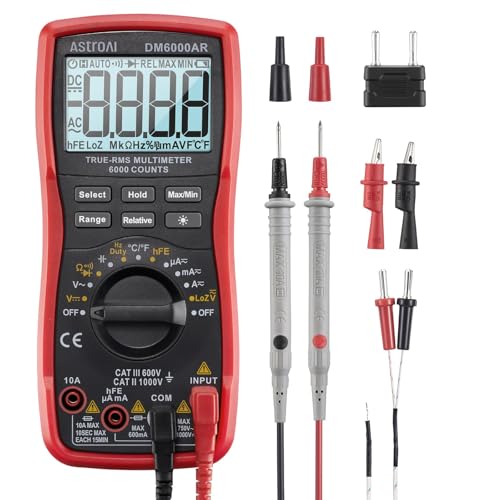
- True RMS and auto-ranging for practical diagnostic use
- Wide measurement range includes temp, frequency, and duty cycle
- Backlit display, kickstand, and double ceramic fuses
Best For: Home mechanics who want a feature-rich meter for automotive and household troubleshooting
Pro Automotive Diagnostic Pick
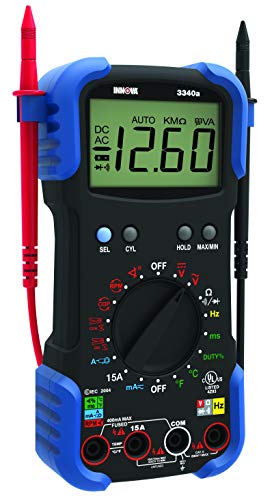
- Automotive-focused testing for engine and electrical faults
- Includes RPM clamp, temperature probe, and carry case
- Auto-ranging with overload protection
Best For: Home mechanics who want a vehicle-first diagnostic meter for engine and wiring checks
Professional Garage Pick
Klein Tools MM420 Auto-Ranging TRMS Multimeter

- Auto-ranging TRMS for accurate readings
- 600V AC/DC, 10A, and multiple test modes
- Backlit display plus lead-alert safety LEDs
Best For: Home mechanics who want a rugged, easy-to-use all-purpose meter
Smart Feature Pick
FNIRSI DMT-99 Rechargeable TRMS Multimeter

- 9999-count True RMS with smart auto-identification
- Rechargeable 1500mAh battery with Type-C charging
- Graph recording and monitoring for intermittent faults
Best For: DIY mechanics who want a modern multimeter with visual diagnostic tools
Simple Basic Pick
Klein Tools MM325 Manual-Ranging Multimeter
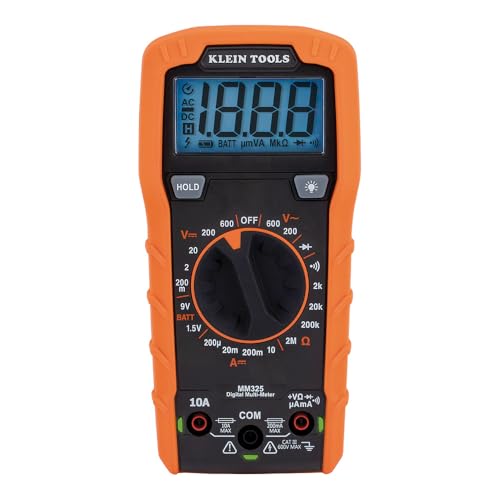
- Measures AC/DC voltage up to 600V
- Includes battery test, continuity, and diode check
- Backlit display with lead-alert LEDs
Best For: Home mechanics who want a simple meter for routine checks
Smart Scan for Garage Work
6000-Count True RMS Rechargeable Multimeter

- True RMS with 6000-count resolution
- 5-inch color screen with flashlight
- USB-C rechargeable with auto-range and NCV
Best For: Home mechanics who want a rechargeable, easy-to-read multimeter
Budget Basic Tester
XL830L Digital Multimeter with Backlit LCD

- Measures voltage, current, resistance, continuity, diode, and batteries
- Backlit LCD with data hold for easier reading
- Includes leads, battery, and 2-year guarantee
Best For: Beginners and budget-minded DIYers who want a simple meter
Pro Safety Upgrade
FS899L 6000-Count True RMS Color Multimeter

- CAT.III 1000V and CAT.IV 600V safety ratings
- 4.8-inch color display with flashlight and Data Hold
- Includes insulated alligator clips for hands-free testing
Best For: DIYers who want a safer, more advanced meter with hands-free accessories
Premium True RMS All-Rounder – AstroAI 6000-Count True RMS Multimeter
If you want automotive multimeters for home mechanics that can also handle everyday electrical troubleshooting, this AstroAI model is a strong all-around pick. It combines True RMS, auto-ranging, and a wide measurement set so you can check vehicle circuits and household projects with one tool.
Best For: Home mechanics who want a versatile multimeter for automotive and household diagnostics.
Pros:
- Measures AC/DC voltage and current, resistance, continuity, capacitance, frequency, duty cycle, diode, and temperature.
- True RMS and auto-ranging add convenience for more accurate readings on AC current and voltage.
- Large backlit LCD, data hold, kickstand, and auto shut-off improve everyday usability.
- Double ceramic fuses and explosion-proof fuse tubes add useful overload protection.
Cons:
- Uses a manual with setup tips, so first-time users may need a quick read-through.
- Included test leads require the cap to be removed before use.
This is a practical pick if you want broad measurement coverage without giving up safety-focused features. It is especially appealing for mechanics who split time between car work and home repairs.
Compact Budget Troubleshooter – KAIWEETS Compact Car Battery Multimeter
For automotive multimeters for home mechanics on a budget, this KAIWEETS unit covers the basics in a compact package. It is designed for AC/DC voltage, DC current, resistance, continuity, and diode checks, making it a straightforward choice for common DIY electrical testing.
Best For: DIY users who want a simple, compact multimeter for basic car and home checks.
Pros:
- Tests AC/DC voltage, DC current, resistance, continuity, and diodes.
- Compact design comes with a carrying case, two leads, and pre-installed AAA batteries.
- Backlight and data hold help when working in dim areas.
- Double fuses and overload protection support safer use.
Cons:
- Does not measure AC current.
- More limited feature set than higher-end automotive meters.
This model makes sense if you mostly need dependable basics rather than advanced diagnostics. It is a convenient, portable option for quick checks around the garage or house.
Black True RMS Upgrade – AstroAI Black 6000-Count Multimeter
This AstroAI option is another strong fit if you are comparing automotive multimeters for home mechanics and want a feature-rich digital meter. It offers True RMS, auto-ranging, and a broad measurement list, so it can support both vehicle troubleshooting and household electrical testing.
Best For: Mechanics and DIYers who want a feature-rich meter with True RMS support.
Pros:
- Measures AC/DC current, AC/DC voltage, capacitance, frequency, duty cycle, resistance, diode, continuity, and temperature.
- True RMS and auto-ranging help simplify many common test scenarios.
- Large backlit screen, data hold, auto shut-off, and kickstand improve day-to-day use.
- Double ceramic fuse protection adds a safety-focused design touch.
Cons:
- Uses corded electric power instead of a battery-powered setup.
- Its feature set may be more than you need for very basic testing.
For buyers who want a modern multimeter with broad functionality, this is an easy model to shortlist. It balances useful measurement coverage with safety and convenience features that suit regular garage use.
Pro Automotive Diagnostic Pick – Innova 3340 Automotive DMM
If your priority is a tool built specifically for vehicle work, this Innova model stands out among automotive multimeters for home mechanics. It is designed to help pinpoint engine problems and includes automotive-focused functions that go beyond a basic general-purpose meter.
Best For: Drivers and home mechanics who want an automotive-first diagnostic multimeter.
Pros:
- Designed to pinpoint engine problems and test alternator diodes, duty cycle, solenoids, breaker points, wiring, and switches.
- Includes auto-ranging, auto shut-off, and overload protection.
- Measures up to 15 amps for device testing.
- Comes with a temperature probe, inductive RPM clamp, and carrying case.
Cons:
- More specialized for automotive work than a general home-use meter.
- Larger and bulkier than compact DIY multimeters.
This is the most purpose-built option in the group for car diagnostics. If you want a meter that leans heavily into engine and electrical testing, the Innova 3340 is the clear specialist choice.
Professional Garage Pick – Klein Tools MM420 Auto-Ranging TRMS Multimeter
For automotive multimeters for home mechanics, the Klein Tools MM420 is a practical all-around pick if you want accurate everyday electrical checks plus extra diagnostic functions. Its auto-ranging TRMS design, 600V AC/DC measurement range, and included temperature, capacitance, frequency, duty cycle, and diode tests make it useful for a wide range of garage and household troubleshooting jobs.
Best For: Home mechanics who want a durable, easy-to-read meter for general automotive and residential electrical testing.
Pros:
- Auto-ranging TRMS readings help improve measurement accuracy.
- Measures AC/DC voltage up to 600V and AC/DC current up to 10A.
- Includes continuity, temperature, capacitance, frequency/duty cycle, and diode test functions.
- Backlit display, lead-alert LEDs, and a kickstand add convenience in a garage setting.
Cons:
- Uses AAA batteries instead of a rechargeable pack.
- Bulkier than compact pocket-style meters.
This is a strong choice if you value a straightforward meter with useful extras and a rugged build. It looks especially well suited to basic automotive diagnostics, HVAC work, and general home electrical troubleshooting.
Smart Feature Pick – FNIRSI DMT-99 Rechargeable TRMS Multimeter
Among automotive multimeters for home mechanics, the FNIRSI DMT-99 stands out for its smart auto-identification, rechargeable battery, and graphing features. The 9999-count True RMS display, NCV support, and waveform/monitoring modes make it appealing if you want a modern meter that can help track intermittent electrical issues more visually.
Best For: DIY mechanics who want a compact, feature-rich meter for troubleshooting automotive and electronics issues.
Pros:
- 9999-count True RMS measurement for detailed readings.
- Rechargeable 1500mAh battery with Type-C charging.
- Auto-mode detects AC/DC voltage, resistance, and continuity automatically.
- Graphic View and Monitoring Mode help visualize fluctuations and intermittent faults.
Cons:
- The advanced interface may be more than some casual users need.
- Smaller form factor may feel less traditional than standard shop meters.
If you like modern tools and want more than basic test functions, this meter offers a lot in a compact package. It is especially attractive for users who expect to diagnose both automotive circuits and household electronics.
Simple Basic Pick – Klein Tools MM325 Manual-Ranging Multimeter
If you want automotive multimeters for home mechanics without extra complexity, the Klein Tools MM325 is a straightforward manual-ranging option. It covers the core checks most DIY users need—AC/DC voltage, DC current, resistance, continuity, diode testing, and battery testing—while keeping the layout simple and practical.
Best For: Home mechanics who want a basic, dependable meter for routine voltage, battery, and continuity checks.
Pros:
- Measures AC/DC voltage up to 600V and DC current up to 10A.
- Includes battery test mode, continuity, and diode test functions.
- Backlit display and lead-alert LEDs improve usability.
- Durable 2m drop rating suits garage use.
Cons:
- Manual-ranging design requires more setup than auto-ranging models.
- Fewer advanced features than higher-end diagnostic meters.
This is a sensible choice if you mainly need a no-frills meter for basic troubleshooting. It should fit well for users who value simplicity, familiar controls, and the core functions most home garage tasks require.
Smart Scan for Garage Work – 6000-Count True RMS Rechargeable Multimeter
If you want one of the more capable automotive multimeters for home mechanics, this rechargeable meter stands out for its large color display, True RMS accuracy, and broad test range. It covers the basics you need for vehicle and household troubleshooting, while the auto-ranging design and NCV detection help make everyday diagnostics faster and safer.
Best For: Home mechanics who want a rechargeable, easy-to-read multimeter for car and garage diagnostics.
Pros:
- True RMS with 6000 counts for AC/DC voltage, current, resistance, capacitance, frequency, diode, continuity, and temperature
- Large 5-inch backlit color screen plus built-in flashlight for dark bays and tight panels
- USB-C rechargeable battery supports up to 8 hours of continuous use
- Auto-range, continuity alert, and NCV detection add convenience and safety
Cons:
- Bulky 5-inch display may be more tool than needed for very occasional users
- Focused on practical diagnostics rather than specialty features
For home repairs and under-hood troubleshooting, this is a well-rounded meter that emphasizes visibility, safety, and convenience. It is especially appealing if you prefer a rechargeable tool over keeping spare batteries on hand.
Budget Basic Tester – XL830L Digital Multimeter with Backlit LCD
This is the straightforward pick among automotive multimeters for home mechanics who mainly need core test functions at a simple price point. It measures voltage, current, resistance, continuity, diode, and batteries, and the backlit LCD plus data hold make it easier to use in a dim garage or driveway.
Best For: Beginners and budget-minded DIYers who want a simple multimeter for basic car and home electrical checks.
Pros:
- Measures AC/DC voltage, DC current, resistance, continuity, diode, and batteries
- Backlit LCD and data hold improve readability in low light
- Overload protection and low battery indication add practical safety and convenience
- Includes battery, test leads, and a 2-year quality guarantee
Cons:
- 2000-count display is more basic than higher-resolution models
- Fewer advanced features than premium automotive meters
If you mostly need a reliable starter meter for checking car circuits, household outlets, and continuity, this model keeps things simple. It is a practical choice when you value ease of use more than advanced diagnostics.
Pro Safety Upgrade – FS899L 6000-Count True RMS Color Multimeter
For home mechanics who want a more feature-rich option in automotive multimeters, this upgraded FS899L adds True RMS accuracy, a bright color screen, and stronger safety ratings. The included alligator clips are especially useful when you need hands-free testing in tight engine bays or crowded panels.
Best For: DIYers who want a safer, more advanced meter with hands-free accessory support for car and home troubleshooting.
Pros:
- True RMS with 6000-count resolution for accurate AC/DC voltage, current, resistance, and capacitance readings
- CAT.III 1000V and CAT.IV 600V safety ratings with dual ceramic fuses and overload protection
- Large 4.8-inch color display, built-in flashlight, and Data Hold for easy viewing
- Includes heavy-duty insulated alligator clips for hands-free testing
Cons:
- More advanced than a basic starter meter, so casual users may not use every feature
- Focused on core diagnostic work rather than specialty automotive accessories
This is a strong pick if you want a safer, more polished meter for frequent troubleshooting and longer test sessions. The rechargeable design and included clips make it especially practical for repeat garage use.
How We Picked the Best Automotive Multimeters for Home Mechanics
For Automotive Multimeters for Home Mechanics, we looked for the features that help most in real-world DIY repair: dependable voltage readings, clear displays, useful safety ratings, and straightforward operation. We also favored models with true RMS where it adds value, since modern vehicles and many accessories can produce noisier electrical signals than a simple basic meter handles well.
We prioritized meters that support common garage tasks like battery testing, continuity checks, diode testing, and current measurement. Extra functions such as NCV, capacitance, temperature, and rechargeable power are useful, but only when they do not complicate day-to-day use.
Quick Comparison
The best choice depends on how you work. If you want a simple backup tool, a basic manual-ranging meter can be enough for batteries and fuses. If you want a do-it-all garage meter, auto-ranging and true RMS usually make troubleshooting faster and easier. For frequent electrical diagnosis, a larger display, better build quality, and stronger current and resistance ranges are worth the upgrade.
Key Buying Factors for Automotive Multimeters for Home Mechanics
Accuracy and True RMS
True RMS is not required for every test, but it improves confidence when reading non-sinusoidal or electronically controlled circuits. For home mechanics, it is a smart feature if you diagnose charging systems, relays, or accessories often.
Auto-Ranging Vs. Manual-Ranging
Auto-ranging is more convenient for most DIY users because it reduces setup time and helps prevent incorrect scale selection. Manual-ranging can still be fine if you prefer a simpler meter and mostly perform basic checks.
Display and Ease of Use
A bright screen, large digits, and a clear selector dial matter more than many shoppers expect. In low-light engine bays or under-dash work, readability can save time and reduce mistakes.
Safety and Build Quality
Look for proper input protection, a fused current port, and a case that feels sturdy enough for garage use. Even for automotive work, good protection helps when you move between vehicle circuits and household electrical tasks.
Features That Add Real Value
Continuity, resistance, diode testing, and DC voltage are the core essentials. NCV, capacitance, temperature, and rechargeable batteries are helpful extras, but they should not replace solid fundamentals.
Who Should Buy Which Automotive Multimeters for Home Mechanics?
If you are a beginner, choose a simple auto-ranging meter with the core automotive functions and an easy interface. If you do weekend repairs and want one tool for both car and home use, a true RMS model with a clear display is a strong middle ground. If you troubleshoot vehicles often, step up to a more robust meter with better resolution, stronger safety features, and a design that feels comfortable in regular use.
In short, the best Automotive Multimeters for Home Mechanics are the ones that make diagnostics faster, safer, and easier to trust without adding unnecessary complexity.